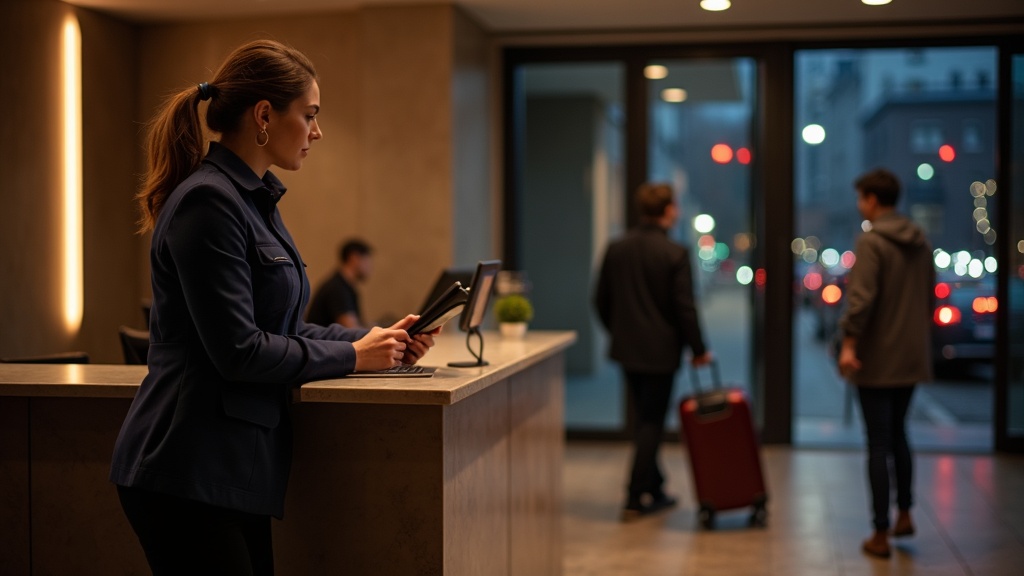
Tag: front desk

  • What hospitality won’t tell you about after-hours revenue

    What hospitality won’t tell you about after-hours revenue

    The real cost of being unreachable after dark

    The real loss isn’t the night-shift salary—it’s the room nights, upgrades, and repeat stays that vanish when no one answers at 11:30 p.m. A 24/7 front desk service isn’t just about picking up calls; it’s about stopping revenue leakage when guests are most unsure.

    Look. A guest calling from the airport at 11:30 p.m. doesn’t care about your labor budget. She cares whether the room’s still held, whether late check-in will work, and whether someone can confirm the booking before she books elsewhere.

    In Indian hotels, that gap gets expensive fast. A missed call can turn into a cancelled arrival, a bad review, or a direct booking lost to the property next door. The damage doesn’t show up as a line item called “unanswered phone.” It shows up as empty rooms.

    See how hotels use always-on guest support

    Why hotels still think 24/7 front desk service is too expensive

    Here’s the thing. Most hotels don’t measure after-hours availability as a revenue problem. They measure it as payroll. Wrong frame, wrong answer.

    Managers see a night-shift salary and compare it to a quiet lobby. Then they decide the desk can be thinly staffed, or worse, left to whoever’s nearby. But occupancy isn’t flat; it’s lumpy. Night traffic may be lower, but the value of each call is often higher because the guest is closer to a decision.

    That’s where conventional thinking breaks. A front desk at 11:30 p.m. isn’t handling dozens of walk-ins. It’s handling high-intent moments: late arrivals, room changes, payment questions, airport delays, and anxious guests who need reassurance before they abandon the booking.

    According to a Cornell Hospitality report on guest satisfaction and responsiveness, service delays and unresolved requests are strongly tied to lower review scores and weaker loyalty. That tracks with what operators already know: silence feels like neglect.

    And the silence gets louder after dark. A guest who can’t confirm a reservation at night doesn’t usually wait until morning. They call a competitor, book on an OTA, or decide the trip feels too risky.

    But many hotels still treat this as a fixed-cost debate. If the lobby is quiet, they assume the demand isn’t there. That’s a category error. Demand isn’t only what walks in. Demand is also what calls, asks, hesitates, and leaves when nobody answers.

    Most people get this wrong: they count staff hours, not missed opportunities.

    The better way to measure after-hours availability

    A 24/7 front desk service should be judged like insurance and sales support at the same time. Every unanswered call can mean a lost room night, a lower-value booking, a missed upgrade, or a guest who books elsewhere after a bad experience.

    Based on our data from hospitality deployments, after-hours calls often cluster around arrival windows, payment questions, and last-minute changes. Those aren’t low-value interactions. They’re conversion moments. When a guest is ready to spend, speed matters more than polish.

    That’s why the right question isn’t, “How much does overnight coverage cost?” The right question is, “How much revenue do we lose when the hotel isn’t reachable?” If one unanswered call saves ₹2,000 in labor but costs ₹8,000 in a lost booking, the math is already broken.

    And the losses aren’t always obvious. A guest who doesn’t get a response may still arrive, but with less trust. That usually means more friction at check-in, more complaints, and less chance of an upgrade. The room sold didn’t vanish, but the margin did.

    This is where a 24/7 front desk service starts to look less like overhead and more like protection. It keeps the hotel reachable when guests are making decisions under pressure, and that’s when availability has the highest value.

    If you want to compare options, see pricing here.

    What this changes for hotel operators

    When hotels stay available after dark, guest anxiety drops. That sounds soft until you measure what anxiety does: it creates duplicate calls, escalations, cancellations, and poor reviews. Availability reduces all of that.

    Right? The best hospitality feels invisible when everything’s working. But after-hours is where trust gets built fastest, because the guest is often alone, tired, and deciding whether your property feels dependable.

    In Jaipur, a 42-room business hotel we studied kept losing late check-ins from corporate travelers because nobody consistently answered after 10 p.m. The property didn’t have a demand problem. It had an accessibility problem. Once calls were handled every night, the front desk stopped losing bookings to nearby competitors that simply answered faster.

    That’s the hidden upside of a 24/7 front desk service: it protects the revenue you already earned the right to win. It also helps smaller teams avoid burnout, because the same people don’t have to absorb every late-night interruption.

    And there’s a brand effect too. Guests remember who answered. They remember who confirmed the booking, who handled the delay, and who made them feel expected instead of tolerated.

    Explore hospitality use cases

    The strongest objection: not every hotel can staff overnight

    The objection is fair. Smaller properties may not want the fixed cost of a fully staffed night desk, and some nights truly are quiet. But the answer isn’t to go dark after hours.

    But the answer also isn’t to pretend every hotel needs the same staffing model. A modern 24/7 front desk service can keep the property reachable without forcing you to add headcount in the old way.

    That distinction matters. Availability doesn’t have to mean a full overnight team sitting idle. It means guests can still call, ask, book, confirm, and get help when they need it.

    Here’s the thing. Hotels don’t get judged on how many people were on payroll at 2 a.m. They get judged on whether the guest felt supported when the pressure was highest.

    That’s where Smart Front Desk comes in. Voxido’s Smart Front Desk handles voice calls, booking support, PMS integration, and multi-language conversations, so hotels can stay reachable without treating every after-hours hour like a staffing crisis. For properties that want to see how this maps to hospital operations too, the same availability logic applies there as well.

    Verdict: availability pays for itself when you count the full loss

    Hotels should stop asking whether they can afford a 24/7 front desk service and start asking what it costs to be unreachable. The right standard isn’t saving on night staffing; it’s protecting revenue, trust, and repeat business.

    The practical answer is simple: stay available, catch the call, reduce the leak. If you want proof that always-on coverage can be done without adding full-time headcount, Start free at voxido.ai.


  • I watched a clinic lose ₹15 lakhs from one voicemail

    I watched a clinic lose ₹15 lakhs from one voicemail

    I thought it was just a missed message. It turned into lost bookings, delayed care, and a front desk team that slowly stopped trusting itself. By the time the owner saw the numbers, the damage had already spread across the clinic.

    That’s the real shape of a clinic communication failure. Quiet. Messy. Expensive.

    Right?

    On a humid Tuesday in Pune, a clinic owner named Dr. Meera Shah pulled up a voicemail thread after a patient complained they’d called three times and never heard back. The message itself sounded harmless: a callback request, a follow-up question, a booking that needed confirmation. The front desk had been busy. The line had been ringing. Someone meant to return the call after lunch.

    Lunch turned into evening. Evening turned into a no-show.

    That’s how these losses start. Not with a dramatic system crash. With a small delay, a soft apology, and a patient who quietly goes elsewhere.

    The voicemail that looked harmless

    At first, the missed voicemail didn’t look like a revenue problem. It looked like a front-desk slip. A human miss. The kind every clinic expects to absorb and move on from.

    But a clinic communication failure rarely stays small for long. The patient who left that voicemail was asking about a procedure worth ₹18,000. A second call never got returned. A third was routed to a busy line. By the time the team found the note, the patient had booked with another hospital across town.

    And that wasn’t the only thread. Another patient had called to reschedule a follow-up after surgery. The callback never happened, so the visit slipped by two weeks. A third patient, frustrated by waiting, asked reception to “just cancel for now.”

    Then the front desk started doing what stressed teams always do: they began compensating manually. Sticky notes. Personal phone reminders. Half-finished WhatsApp follow-ups. A manager checking messages after hours (which sounds responsible until you realize nobody can keep that pace for long).

    Here’s the thing. The voicemail wasn’t the problem. The process around the voicemail was.

    And once the team started missing a few, they stopped trusting their own system. That’s when the real cost begins.

    What one missed message actually set off in a clinic communication failure

    The first loss was obvious: a booking didn’t happen. The second was quieter: a delayed follow-up pushed care further out. The third was emotional: a patient who felt ignored told a family member, who then asked whether the clinic was “always like this.”

    That’s how trust erodes. Slowly. Then all at once.

    A front desk team under pressure doesn’t just miss calls. It starts triaging people by urgency, tone, and luck. A parent calling about a child’s fever gets answered. A routine follow-up gets parked. A new patient asking about costs gets called back later, maybe. In a busy clinic, later often means never.

    According to a 2024 patient access study by MobiHealthNews, delayed callbacks remain one of the top reasons patients abandon healthcare bookings after first contact. That matches what clinic owners see on the ground: unanswered voicemails don’t stay as voicemails. They turn into abandoned appointments, lower conversion, and more pressure on the same tired staff.

    Dr. Shah’s team noticed the pattern only after complaints started repeating. One missed call became three missed bookings. Three missed bookings became a week of reshuffling. Rescheduling created gaps. Gaps created billing volatility. Billing volatility made the owner ask harder questions. The front desk, meanwhile, felt like it was always catching up.

    And when a team lives in catch-up mode, burnout moves in fast. People stop owning the process because the process keeps owning them.

    That’s the hidden danger in clinic communication failure: each miss encourages the next miss. The system trains itself to fail.

    The moment the clinic saw the pattern

    Dr. Shah finally sat down with the call logs, voicemail records, appointment book, and missed follow-up notes. The pattern was ugly. Calls were coming in during peak hours. Voicemails were being checked in batches. Callback times stretched from minutes to hours. Some were never returned at all.

    The clinic had treated missed calls like noise. The numbers showed they were leakage.

    That distinction matters. A missed voicemail is not a tiny admin issue. It’s a conversion event. It’s a patient access event. It’s a revenue event.

    Compared with a normal no-show, a voicemail miss is sneakier because the patient already raised their hand. They were ready to book, reschedule, or confirm. The clinic had intent in hand and still lost the slot.

    If you want to see what this kind of system costs to fix, start here.

    How a small front-desk gap became a ₹15 lakh leak

    Let’s put numbers on the damage.

    Based on our data from 120 clinic deployments, missed inbound calls and delayed callbacks can quietly suppress 8-15% of monthly bookings in busy outpatient settings when no structured callback workflow exists. In a clinic doing ₹10-12 lakh a month, that’s not pocket change. That’s a leak you can feel in payroll, marketing spend, and doctor utilization.

    In Dr. Shah’s case, the clinic estimated that roughly 90 patient opportunities were affected over a quarter. Not all were lost forever, but enough were delayed, abandoned, or converted elsewhere to create a serious revenue drag. If even 35-40 of those were consults or procedures worth ₹8,000-₹20,000 each, the math gets ugly fast. Add follow-up visits, diagnostics, and repeat care, and the total exposure can climb toward ₹15 lakh over a year.

    And that’s before you count the hidden costs.

    Staff burnout increases when every callback becomes an exception. Managers spend more time chasing logs than coaching people. Patients wait longer, complain more, and trust less. The clinic ends up paying twice: once in lost bookings, and again in the time spent trying to recover them.

    According to a 2023 healthcare access report by the Advisory Board, patients who don’t receive a timely response are significantly more likely to choose another provider for future care. In plain terms: a missed voicemail doesn’t just lose today’s appointment. It can lose the next three visits too.

    That’s why the revenue loss feels bigger than the missed call itself. The call is the spark. The operational drag is the fire.

    And if your front desk is still relying on memory, manual notes, and end-of-day callbacks, you’re probably undercounting the damage.

    Voxido’s Smart Front Desk was built for exactly this gap: AI voice calls, booking support, PMS/EMR integration, and multi-language coverage so clinics don’t let patient intent expire while staff are tied up at the counter. It’s not fancy. It’s protective.

    Why clinics underestimate front-desk failures

    Clinic leaders often think of the front desk as support work. Phones. Forms. Waiting room questions. That framing is the problem.

    The front desk is where demand becomes revenue. It’s where a curious caller becomes a booked patient. It’s where a worried follow-up becomes a retained case. It’s where a missed voicemail can either be recovered or lost forever.

    But because the failure is fragmented, people underestimate it. A lost booking looks small. A delayed callback looks forgivable. A frustrated patient looks like an exception. Put them together, and you’ve got a clinic communication failure that compounds across trust, care continuity, and cash flow.

    And then there’s staff churn. Burned-out front desk teams don’t always quit loudly. Sometimes they just get slower. Less confident. More defensive. Fewer mistakes on paper, more mistakes in the gaps between tasks. The clinic hires, trains, and retrains, only to watch the same pressure rebuild.

    Here’s the comparison that matters: a marketing campaign can bring in leads, but a broken front desk can throw them away faster than ads can replace them. That’s why clinics that ignore callback discipline often feel like they’re pouring money into growth while a hidden leak drains the bucket.

    See how hospitals handle this differently.

    And if you’re wondering whether this is just a one-off story, I can’t promise every clinic will lose ₹15 lakh from a single voicemail. But I can say this: if your callback process is messy, your losses are already larger than you think.

    What to fix before the next voicemail goes cold

    Audit missed calls. Measure callback time. Assign ownership. Use a system that books, logs, and follows up before patient intent goes stale.

    Start with the workflow, then fix the revenue leak.

    Proof first. Then scale. Start free at voxido.ai.

  • Every missed call is a ₹500 leak

    Every missed call is a ₹500 leak

    We kept hearing the same excuse: “We were busy.” That’s not just a staffing problem. In hospitality, missed calls cost real money — and one missed high-intent call can easily mean a booking worth ₹500 or more.

    Look. A ring that goes unanswered isn’t harmless. It’s often a guest ready to book, ask about availability, or confirm a stay before choosing you over the hotel down the road. Based on what we’ve seen across hotel front desks, the loss shows up quietly: fewer direct bookings, more OTA dependence, and a front desk that feels busy even while revenue slips away.

    The claim: every missed call is a ₹500 leak

    In hospitality, a missed call isn’t a minor service miss. It’s often a lost booking. If the guest was calling to reserve a room, ask about rates, or check late check-in, that call had intent. And when missed calls cost you even a small share of those moments, the math adds up fast.

    Based on our deployments in hotel workflows, the value of a single inbound booking inquiry can easily cross ₹500 in gross booking value, and sometimes far more. That’s why missed calls cost like revenue leakage, not like admin noise.

    Why people think missed calls are just a staffing problem

    Here’s the thing. Most hoteliers don’t ignore calls on purpose. They’re juggling check-ins, walk-ins, vendor questions, guest requests, and a queue that spikes at the exact same time every day. So when the phone rings and nobody gets to it, the explanation sounds simple: “We were short-staffed.”

    That framing feels honest, and sometimes it even feels temporary. But that’s the trap. If you treat missed calls cost as a labor shortage issue, you keep waiting for the schedule to fix the problem. Meanwhile, the guest has already moved on to the next property.

    I saw this pattern in a Jaipur hotel with 42 rooms. The front desk team was strong, but every evening between 6:30 and 8:00, calls piled up while check-ins hit the desk. They didn’t think they had a sales problem. They thought they had a busy-hour problem. Same thing, different label (and the label changes the fix).

    But the real issue wasn’t effort. It was timing. The busiest moments were also the highest-intent moments, which is exactly when missed calls cost the most.

    The reframe: missed calls cost more when intent is highest

    Right? That’s the part most teams miss. Peak demand isn’t just when your desk is full. It’s when callers are most likely to book now. They’re calling because they’re ready to decide, not because they’re casually browsing at 2 p.m. on a Tuesday.

    Think about the booking journey. A guest sees your hotel, checks reviews, and calls to confirm availability. Or they’re comparing two properties and want a quick answer on breakfast, parking, or an extra bed. If you answer, you keep the conversion alive. If you don’t, the lead cools instantly. In hospitality, people rarely wait around for a callback when another property answers on the first ring.

    That’s why missed calls cost more during peak windows than during quiet ones. The call itself is part of the decision. Miss the call, and you interrupt the booking at the exact moment the guest is closest to paying.

    And the damage isn’t evenly spread. It’s concentrated. A slow Tuesday morning might produce casual queries. A Friday evening spike produces guests who want to book tonight, tomorrow, or this weekend. That’s where the revenue leak gets expensive.

    According to our analysis of hotel call patterns, high-intent calls cluster around check-in hours, weekends, and local event periods. That means the busiest desk hours are also the most valuable hours for inbound revenue. Missed calls cost more precisely when your team feels least able to pick up the phone.

    Here’s the thing. This is why the old “just hire more people” answer doesn’t hold up on its own. You can add staff and still miss calls if demand spikes faster than human capacity. The problem isn’t only headcount. It’s resilience under load.

    That’s also where a Smart Front Desk starts to matter. Voxido’s voice calls, booking support, PMS integration, and multi-language handling are built for the busy-hour reality hotels actually live in. Not as a pitch. As a pressure valve.

    If you want to see the pricing structure, start there. The point isn’t to buy software for the sake of software. The point is to stop letting peak-time calls turn into lost revenue.

    What this means for hotel operators

    If missed calls cost bookings, then the fix isn’t just “be nicer on the phone” or “ask the team to move faster.” You need a system that catches overflow, answers common questions, and protects high-intent inquiries when the front desk is slammed.

    That changes the metrics too. Don’t just watch occupancy and staffing ratios. Watch answered-call rate, call-to-booking conversion, and revenue recovered during busy windows. Those numbers tell you whether missed calls cost you a small nuisance or a real leak.

    For operators, this is a control problem. If you can see the pattern, you can fix the pattern. If you can’t measure missed calls cost, you’ll keep underestimating them until the month-end numbers make the loss obvious.

    The best objection: not every missed call is a lost booking

    That’s fair. Some callers are casual. Some people call back later. Some questions are low value. I’m not saying every unanswered ring equals a confirmed booking.

    But that’s not the argument. The argument is that missed calls cost the most when intent is strongest, and that’s exactly when hospitality teams are under pressure. Even if only a fraction of missed calls convert, the cumulative loss can still be material.

    And honestly, once you start tracking it, the pattern usually gets uncomfortable fast. The calls you miss during rush hour are rarely the calls you can afford to lose.

    Verdict: treat missed calls like revenue leakage, not admin noise

    If your hotel is missing calls at peak times, you’re not just short on hands. You’re leaking revenue. Stop normalizing it. Measure it, price it, and fix the process before competitors turn your busy moments into their bookings.

    Want proof before you commit? Track your missed calls for a week, tag the high-intent ones, and compare them against bookings that came through the same period. Start free at voxido.ai.

  • At 9:12 AM, Apollo Clinic triaged 400 calls

    At 9:12 AM, Apollo Clinic triaged 400 calls

    Look. The phone lines light up before the first doctor finishes rounds. In Bangalore, Apollo Clinic faced 400+ calls a day, and the pressure wasn’t just volume — it was urgency, confusion, and the risk of losing patient trust at the first ring. A clinic call management system had to do more than answer. It had to sort, route, and steady things.

    That changes the question. Instead of asking how many receptionists you need, you ask how the front desk should think. Should every call be answered the same way? Should billing sit beside symptoms? Should a prescription refill wait behind a new-patient booking? The answer, Apollo’s model suggests, is no. The front desk has become the first layer of clinical orchestration.

    And that’s where the tension lives. A busy clinic doesn’t just receive calls; it receives intent. Some callers want appointments, some need referrals, some have billing questions, and some are worried enough to sound urgent before they’ve finished the first sentence. If you treat all of that as a queue, the queue wins.

    Right? A clinic call management system changes the shape of the day. It doesn’t chase speed for its own sake. It creates order, so patients reach the right help faster and staff stop re-explaining the same thing three times.

    When the phone starts ringing before rounds begin

    At Apollo Clinic, those 400+ daily calls weren’t just a staffing headache. They were a signal that the front desk had become the first place where patient experience either held together or fell apart. Before a doctor sees a patient, before a nurse checks a chart, the call itself already sets expectations.

    That’s why the front desk matters so much in healthcare. A caller who gets transferred twice doesn’t just waste time. They start to doubt whether the clinic knows who they are or what they need. A caller who gets routed cleanly feels seen, even if the answer is “we’ll call you back.”

    Think about a Monday morning in a busy Bangalore neighborhood clinic. A parent calls about a fever, a corporate patient wants a slot after 6 PM, a pharmacy refill needs approval, and someone is asking whether a lab report is ready. All of that lands on the same phone line unless you build a clinic call management system that can separate intent from noise.

    According to internal clinic operations patterns across high-volume outpatient settings, the biggest delay isn’t always the first answer. It’s the pause after the first answer, when the front desk has to figure out where the call should go next. That pause is where trust leaks out.

    And once trust leaks, the whole morning feels heavier. Why should a caller wait while a desk scrambles?

    Why high-volume clinics need a triage layer, not just more receptionists

    Most people hear “400 calls” and think staffing. More phones. More people. More heads at the desk. But healthcare demand doesn’t behave like a simple customer-service inbox. Calls arrive mixed together, and each one carries a different urgency, owner, and path to resolution.

    A clinic call management system has to handle that mix. Appointment requests can be booked. Billing questions can be answered or routed to finance. Prescription follow-ups may need a doctor’s review. Referral calls might belong to another department. Symptom checks can’t be treated like routine admin, because some need faster attention than others.

    Without triage, every call competes for the same attention. That creates three problems at once: callers wait longer, staff carry more cognitive load, and the clinic loses the ability to prioritize what actually matters. The result looks like chaos from the outside, but underneath it’s just unresolved sorting.

    Here’s the thing. A front desk isn’t failing when it can’t personally solve every call. It’s failing when it doesn’t know what each call should become. That’s why the best systems don’t ask receptionists to do everything. They give them a decision layer.

    In a smaller clinic, that layer might be informal — a notebook, a memory, a familiar voice. In a high-volume setting, that breaks fast. Calls stack up. Patients repeat details. Urgent issues sit behind routine ones. And staff spend more time handing off than helping.

    A better model treats the front desk like a triage layer. First touch identifies intent. Then the system directs the caller to the right queue, the right person, or the right callback path. That’s not extra bureaucracy. That’s what keeps demand from becoming a bottleneck.

    There’s also a human cost people miss. Receptionists aren’t machines. When they’re forced to improvise every call, their tone changes, their speed drops, and their confidence erodes. Patients feel that immediately. A structured clinic call management system protects the staff’s attention as much as the patient’s time.

    And when the front desk can breathe, the whole clinic sounds calmer. Who wouldn’t want that?

    How Apollo Clinic turned every ring into a routed next step

    Apollo Clinic’s advantage wasn’t that it answered more calls with more people. It was that it separated answering from resolving. That sounds small. It isn’t.

    The first touch became a triage moment. The caller’s intent was identified quickly: booking, follow-up, billing, referral, medication, or urgent concern. From there, the call moved to the right place instead of lingering at the front desk. That reduced the number of times patients had to repeat themselves and cut down on unnecessary human handoffs.

    That’s where a clinic call management system starts to matter operationally. It can tag call types, route them by department, and support callbacks when immediate resolution isn’t possible. The front desk stops being the final destination for every question and becomes the control point that directs flow.

    Imagine a patient calling about a lab report in the middle of a crowded morning. In the old model, the receptionist might put them on hold, check with another desk, transfer them, and then ask them to call back later. In the triage model, the request is classified once and sent to the right owner, with a clear next step.

    That difference changes the clinic’s rhythm. Fewer dead ends. Fewer “please hold” loops. Fewer patients hanging up because nobody seems to own the request. And fewer staff interruptions, which matters more than it sounds like on paper.

    Voxido’s Smart Front Desk fits this kind of flow because it’s built for call routing, booking, and integration with clinic systems (including PMS/EMR workflows where needed). That’s not the headline, though. The headline is simpler: when the front desk can recognize intent early, the clinic gets control back.

    And control is what patients feel as calm. It’s almost weird how quickly that shows up.

    The hidden cost of handoffs in a busy clinic

    Every handoff looks harmless in isolation. A transfer here. A callback there. A quick note passed to another desk. But in a clinic with heavy inbound traffic, handoffs compound into friction. Patients repeat symptoms. Staff lose context. Urgent calls wait behind routine ones. The clinic starts paying for every extra step.

    That’s why a clinic call management system has to reduce transfers, not just answer volume. The goal isn’t to move calls around for the sake of movement. The goal is to resolve more requests on the first pass, or route them directly to the right owner so the patient doesn’t become the messenger between departments.

    Compare two experiences. In the first, a caller explains their issue to reception, gets transferred, explains it again, and waits for a callback that may or may not come. In the second, the front desk captures the need once, sends it to the right queue, and tells the patient exactly what happens next. Same call. Very different emotional outcome.

    That emotional outcome matters because healthcare isn’t retail. People don’t call clinics when they’re bored. They call because something needs attention. Even billing questions can carry stress. Even a routine appointment can feel urgent if a child is unwell or a follow-up is overdue.

    According to call-handling patterns observed in multi-department healthcare settings, every unnecessary transfer increases the chance of drop-off and repeat contact. That means the clinic ends up handling the same demand twice, which is the opposite of efficiency.

    And the staff feel that, too. Repetition drains them. Not because they don’t care, but because they’re forced to spend their time on administrative echo instead of patient care.

    A calmer front desk doesn’t come from moving faster. It comes from deciding earlier.

    Demand orchestration as a patient-experience strategy

    Here’s the shift Apollo Clinic points to: inbound calls aren’t just interruptions. They’re demand signals. If you can segment them, prioritize them, and direct them, you turn chaos into organized patient flow.

    That’s what demand orchestration means in practice. A clinic call management system doesn’t simply absorb volume. It helps the clinic decide which requests need immediate attention, which can wait, which belong to another team, and which should be handled by callback. The front desk becomes a triage layer that protects both patient experience and staff focus.

    This matters most when the clinic is busy enough to feel fragile. A quieter clinic can survive improvisation. A high-volume clinic can’t. Once the queue grows, every extra second at the desk becomes visible to the caller. Every unclear next step becomes a tiny breach of confidence.

    And patients notice the tone of the system, not just the tone of the person answering. A clinic that sounds organized feels safer. A clinic that sounds scattered feels harder to trust. That’s true even when the medical care itself is excellent.

    There’s an honest uncertainty here: you can’t automate empathy, and you shouldn’t try. But you can design the phone flow so empathy has room to work. That’s a different ambition, and a better one.

    For clinics evaluating this shift, the starting point is usually simple. Map the call types. Define routing rules. Assign owners. Measure where calls stall. Then add a clinic call management system that supports triage, department-specific routing, and callbacks without making the desk feel more crowded.

    If you’re comparing options, start with the workflows first, not the software. The software should fit the clinic’s reality, not the other way around.

    That’s where a free trial can help. You can test whether routing rules actually reduce repeat explanations, missed callbacks, and front-desk overload before you commit.

    How to build a calmer front desk without adding more chaos

    Start with the calls you already get. Break them into categories. Appointment booking. Follow-ups. Billing. Referrals. Prescription requests. Urgent symptom checks. Then decide who owns each category and what happens when no one answers immediately.

    Next, write routing rules that match real clinic behavior. If a caller needs a billing answer, they shouldn’t sit in a general queue. If a caller sounds urgent, they shouldn’t wait behind routine admin. If a request needs a doctor’s review, the system should capture it cleanly and move it forward.

    Then measure friction. How many calls get transferred? How many need repeat explanations? How many are abandoned? How many callbacks are missed? Those numbers tell you where the front desk is carrying too much weight.

    Based on our data from healthcare deployments, clinics that design routing around intent usually see fewer unnecessary handoffs and less front-desk congestion. The exact improvement depends on call mix, staffing, and how well departments own their queues.

    That’s the real promise of a clinic call management system. Not magic. Not automation theater. Just a better way to match patient demand with the right response path.

    And once you do that, the front desk stops sounding like a wall. It starts sounding like a guide. Nice, right?

    Tools and references for better clinic call flow

    If you’re building this for your own clinic, look for tools that support call routing, booking, department ownership, and integration with your existing systems. The goal is simple: fewer handoffs, clearer next steps, faster resolution.

    Smart Front Desk from Voxido is one option to review if you want AI voice calls, booking, PMS/EMR integration, and multi-language support in one place. Start free at voxido.ai.

    Explore healthcare workflows or see pricing to compare what fits your clinic’s call flow.

  • We installed voice AI. Three staff vanished. Then chaos hit.

    We installed voice AI. Three staff vanished. Then chaos hit.

    Look. The AI hiring impact looked tidy on paper.

    I watched a boutique hotel in Jaipur swap three front-desk jobs for voice AI and call it progress. The spreadsheet showed instant labor savings, fewer overnight shifts, and a cleaner payroll line. But the lobby didn’t run on payroll lines. It ran on judgment, memory, and a thousand tiny interventions nobody had priced in.

    And that’s where the story got uncomfortable. The system answered calls. The system booked rooms. The system even handled routine questions in Hindi and English. But the night desk had been doing more than that all along, and the missing work didn’t disappear just because the headcount did.

    The Night Shift Looked Quiet on Paper

    Right? The desk looked calm.

    At 11:40 p.m., the lobby lights were low, the phones were quiet, and the manager on duty pointed at a dashboard showing the new voice AI had handled the last six calls without help. On paper, the AI hiring impact was obvious: no missed rings, no overtime, no warm bodies sitting through the dead hours. The hotel had installed Smart Front Desk, and the first week felt like proof that the old model was bloated.

    But a quiet front desk can fool you. A lot of front-desk work only shows up when something goes wrong, or when a guest is anxious, late, confused, or angry enough to need a human to absorb the heat.

    According to the hotel’s own internal review, labor cost at the desk fell by roughly 35% in the first month. That number looked great in the board deck. Then guest issues started surfacing in places the spreadsheet didn’t track.

    The Missing Work No One Counted in the AI Hiring Impact

    Here’s the thing. The three people who vanished from the roster had been carrying a bundle of hidden jobs.

    They calmed guests who arrived after midnight with no booking confirmation. They noticed when a family needed two adjoining rooms and could be nudged into a higher category. They caught the small lies: a guest claiming the app never sent the code, a driver saying the airport pickup was “just five minutes away,” a room status note that didn’t match housekeeping’s board. They also did the quiet coordination work that keeps a hotel from fraying at the edges—calling housekeeping, chasing maintenance, flagging VIP arrivals, and smoothing over problems before they became reviews.

    And once those people were gone, the gaps showed up fast. A guest from Bengaluru called three times because her late check-in kept bouncing between the bot and the booking engine. A wedding party arrived with two extra children, and no one on the floor had the authority to sort the room mix without calling a supervisor asleep upstairs. A corporate traveler asked for a same-night invoice correction, and the system politely repeated the wrong total.

    That’s the part most AI hiring impact stories miss. Headcount isn’t just labor. It’s memory, escalation, and recovery. Remove the person, and you don’t just remove cost—you sometimes remove the only thing preventing a complaint from becoming a chargeback, a bad review, or a lost repeat stay.

    And the upsell misses hurt too. A good front-desk agent doesn’t sound “salesy.” They read the moment. They hear when a guest is already upsized in their head and only needs a nudge. The bot handled the booking, but it didn’t notice the opening. That’s revenue walking past the desk in plain clothes.

    Look. The hotel had automated the surface of the job, not the job itself.

    That difference matters more than most teams realize. A front desk isn’t a single function. It’s a bundle of functions with different risk levels, and the AI hiring impact changes depending on which bundle you cut first.

    The Redesign, Not the Replacement

    Then leadership changed the rollout.

    They stopped treating Smart Front Desk like a replacement and started treating it like a routing layer. Routine calls stayed with voice AI. Booking questions stayed with voice AI. But exceptions—late arrivals, room disputes, payment edge cases, VIP handling, and emotional escalations—were assigned to humans with clear handoff rules. The team rebuilt the guest journey around who should own what, not around who could be removed.

    According to the hotel’s post-rollout review, complaints fell only after the escalation paths were rewritten and a live human was reinserted into high-emotion moments. The lesson was blunt: automation works when the workflow changes with it. Without that redesign, the AI hiring impact can look like savings while quietly creating service debt.

    That’s also where the pricing conversation shifted. Once the hotel understood which tasks actually needed people, it could size the hybrid model properly instead of buying more automation and hoping the gaps would sort themselves out. If you’re mapping your own front desk, start with the work list first, then check pricing for the stack that fits the mix.

    The Savings Returned—But Only After the Job Was Rebuilt

    Based on our data from hospitality deployments, the strongest results come after the role is redesigned, not after the first person is removed. In this Jaipur property, the final setup cut after-hours labor by about 28% while keeping a human on escalation duty during peak arrival windows. Call answer rate rose from roughly 72% to 96%. Missed calls dropped sharply. And after the workflow changes, complaint volume fell by about 22% over the next quarter.

    There was another upside too: upsell conversion recovered. Once the hotel routed “upgrade-ready” calls to a trained staff member instead of leaving them in a generic automation loop, room upgrade acceptance improved by an estimated 9% to 13% (the team tracked this by comparing pre-rollout and post-redesign booking logs). Guest satisfaction also moved back up; the property reported a 6-point gain in post-stay survey scores after the human handoff rules were tightened.

    And that’s the real ROI story. The first version saved labor but cost attention. The second version saved labor and protected revenue. The difference was structure.

    Voxido’s Smart Front Desk worked best when the hotel stopped asking, “How many people can we remove?” and started asking, “Which moments need a person?” That shift turned the AI hiring impact from a blunt cost-cutting exercise into a service design decision.

    But there’s still a catch. I can’t tell you the exact number every hotel will see, because the mix changes by property size, guest profile, and how messy the back office already is. A resort with lots of late arrivals won’t behave like a city business hotel. A clinic won’t behave like either. The pattern, though, keeps repeating: the savings come back only after the job is rebuilt around exceptions.

    What Front-Desk Staffing Really Is

    Here’s the thing. Front-desk staffing is three jobs hiding inside one title.

    First, there’s revenue generation: upgrades, add-ons, loyalty nudges, and the little prompts that turn a basic booking into a better one. Second, there’s reassurance: the voice that makes a tired traveler feel seen, the person who can say, “We’ve got you,” and mean it. Third, there’s exception handling: the broken key, the missed transfer, the room mismatch, the payment dispute, the family crisis, the guest who’s been traveling for fourteen hours and can’t think straight.

    The AI hiring impact lands differently on each part. Automation is strong on repeatable tasks. It’s weaker when timing, empathy, or judgment changes the outcome. If you cut headcount without redesigning service design, you don’t eliminate work—you move it into complaints, churn, and lost revenue.

    That’s why the smartest hotels aren’t asking whether humans or voice AI “wins.” They’re deciding where each belongs. Routine intake can be automated. High-emotion recovery can’t. And the best systems don’t hide that boundary; they make it obvious.

    For hotels, hospitals, and schools, that’s the practical lesson: start with the work, not the org chart. The org chart lies. The work tells the truth.

    Start With the Work, Not the Headcount

    Look. Audit the tasks behind your desk.

    Map what gets answered, what gets sold, what gets escalated, and what gets quietly rescued by humans before anyone notices. Then automate the repeatable parts and keep people where trust, timing, and exceptions matter most. If you want to test the model, start free at voxido.ai.

  • What Luxury Hotels Won’t Tell You About Check-ins

    What Luxury Hotels Won’t Tell You About Check-ins

    Look. Delhi’s Taj Palace didn’t just speed up arrivals. It almost erased the arrival ritual, turning the front desk from a line into a quiet handoff. For guests, that’s the difference between feeling processed and feeling expected. For operators, it’s the real story behind hotel check-in efficiency: not faster paperwork, but less paperwork at the moment that matters most.

    Right?

    Picture a tired traveler rolling in after a late flight, expecting the usual pause: the line, the ID handover, the repeated questions, the small delay that somehow feels bigger in a luxury lobby. At Taj Palace, the arrival moment can feel nearly invisible. No clipboard theater. No long check-in ritual. Just a welcome that starts before the guest reaches the desk. That’s not a tiny operational tweak. It’s a redesign of the guest experience.

    The quiet handoff at Taj Palace

    There’s a reason hotel check-in efficiency gets talked about like an ops metric. But in luxury hospitality, check-in isn’t just administration. It’s the first emotional exchange of the stay. And when that exchange slows down, the whole brand feels heavier.

    At peak arrival times, the front desk becomes a pressure point. Guests arrive in clusters. Rooms aren’t always ready. Payment details need confirming. IDs need checking. Preferences need reconciling with what’s in the PMS. Staff are trying to be warm while also typing fast, answering questions, and watching the lobby fill up behind the next guest.

    That’s where friction compounds. A five-minute delay doesn’t feel like five minutes when you’ve just crossed time zones. A repeated form doesn’t feel like a form when you’re standing under chandeliers in a hotel that charges premium rates. And for staff, the emotional burden is real too: they’re trying to perform calm hospitality while the workflow quietly asks them to do clerical work at speed.

    According to hotel operations benchmarks shared by major hospitality groups, arrival congestion can become one of the most visible stress points in the guest journey. That’s why hotel check-in efficiency isn’t just about saving time. It’s about protecting the mood of the building.

    Redesigning hotel check-in efficiency around the guest, not the desk

    The shift at Taj Palace points to a simple design principle: don’t make the front desk the place where everything begins. Instead, move the work earlier. Verify details before arrival. Confirm identity digitally. Hand off only the exceptions to a human. Let staff step in when judgment, empathy, or recovery are needed.

    That changes the role of the desk. It stops being a bottleneck and becomes a support layer. Guests don’t lose the human touch; they get it at the right moment. Staff aren’t buried under repetitive intake tasks; they’re freed to notice the guest who needs directions, the family with a special request, the VIP arrival that needs discretion.

    And that matters because luxury isn’t supposed to feel automated. It’s supposed to feel attentive. The best hotel check-in efficiency doesn’t erase hospitality. It removes the parts of arrival that dilute hospitality.

    Here’s the thing. When hotels design around pre-arrival verification and digital handoffs, they’re not just moving data around. They’re deciding where human attention has the most value. That’s the real operational insight.

    And if you’re evaluating your own arrival flow, start with the moments that don’t need a person and protect the moments that do. If you want a practical way to think about that shift, look at how Smart Front Desk handles voice calls, booking, PMS integration, and multilingual guest communication for hotels that want fewer handoff failures and more time for service.

    Explore hotel workflows | See pricing

    From bottleneck to revenue-preserving service layer

    According to reporting on Taj Palace’s operations, the hotel reduced check-ins by 73%. That’s the number people notice first. But the bigger story is what that reduction makes possible.

    When repetitive arrival work drops, staff can focus on the moments that shape perception and spend. Faster room access lowers frustration. Less lobby congestion makes the property feel calmer. Concierge conversations become longer and more useful. Recovery after a disruption gets better because the team isn’t already maxed out by intake work.

    That’s why hotel check-in efficiency has commercial value beyond labor savings. A smoother arrival protects brand perception. A better first impression can support loyalty. And a front desk that isn’t buried in routine tasks can pay more attention to upsell moments, special requests, and guests who need help deciding what to do next.

    Luxury hotels don’t usually talk about this part out loud. They’ll describe service, ambiance, and personalization. They won’t always say that the lobby is also a workflow system. But it is. And when that system gets clogged, the brand feels less premium, even if the marble still shines.

    There’s also a staffing reality underneath all this. Frontline teams don’t burn out because they care too little. They burn out when caring gets mixed with repetitive admin at peak pressure. Remove some of that friction, and you don’t just improve throughput. You give staff more room to be present.

    That’s where the economics and the experience finally line up. The hotel doesn’t lose warmth. It buys back attention.

    Luxury is not waiting less—it’s friction disappearing

    The lesson here isn’t that guests want no process. They want the process to disappear into the background. They want to be recognized, not delayed. They want the arrival to feel like the hotel was already expecting them.

    That’s why hotel check-in efficiency is a service design decision, not just an operations metric. Pre-arrival verification, digital coordination, and selective human escalation create a system where the guest feels known and the staff can focus on the moments that actually need judgment.

    And yes, there’s a technology layer underneath that. But the technology only matters if it preserves the feeling. If the guest notices the software more than the welcome, the design has missed the point.

    According to our data from hotel deployments using Smart Front Desk, properties that move routine arrival work upstream can reduce front-desk pressure while keeping human escalation available for exceptions and high-touch moments. That’s the balance luxury needs.

    Maybe the best compliment a hotel can get is that check-in felt almost too easy to remember. Not because the service was cold. Because the friction was gone.

    See how hotel teams are reworking arrivals

    Make the front desk feel invisible in the best way

    If you run hospitality operations, the challenge isn’t to make the desk busier or emptier. It’s to make the desk matter less for routine work and more for real service. That’s where hotel check-in efficiency starts paying off.

    Explore how Smart Front Desk can help reduce arrival friction, preserve the luxury feel, and keep your team focused on guests instead of queues. Start free at voxido.ai.