Blog

  • How Hotels Should Triage Guest Reviews: A Practical Response Workflow

    How Hotels Should Triage Guest Reviews: A Practical Response Workflow

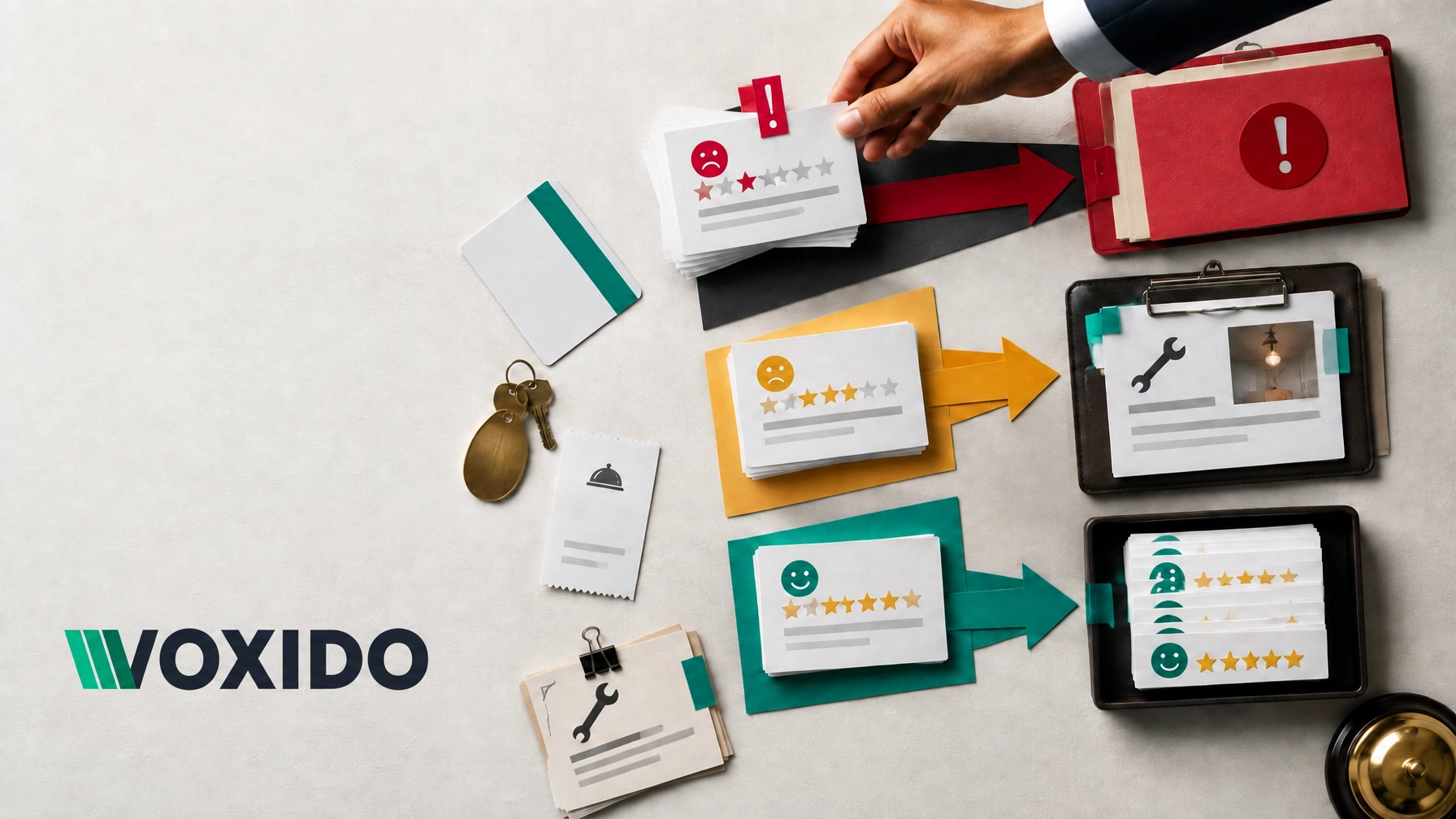
    Should your hotel reply to every guest review?

    Not necessarily. Every review should enter your workflow, but not every review deserves the same response speed, approval path, or amount of personal attention. The practical goal is to prioritise reviews by risk and business value while ensuring routine feedback is not forgotten.

    For most hotels, the right system combines five signals:

    1. Severity: How serious is the complaint?
    2. Recency: Is the issue new or still relevant?
    3. Topic: Does it point to a recurring operational problem?
    4. Guest-identifiable service issue: Can your team recognise and recover the stay?
    5. Response ownership: Who can make or approve the next decision?

    The result is not “reply to everything immediately.” It is a controlled process that protects reputation, gives managers visibility, and turns reviews into operational work.

    What the evidence says about review responses

    A Cornell Center for Hospitality Research report by Chris Anderson and Saram Han, “Hotel Performance Impact of Socially Engaging with Consumers,” was published in May 2016. One part of the study examined 2015 TripAdvisor data from 65,195 hotels in four markets—Dubai, France, Italy, and the UK. It found a relationship between management response rates and revenue generated through TripAdvisor referrals, with diminishing returns estimated around a 40% response rate.

    The report also analysed three years of data from just over 7,400 quarterly hotel observations in New York City and 3,600 in Orlando. Responses to negative reviews were more positively related to rating changes than responses to positive reviews.

    These findings are useful directionally, not as a universal target. The authors explicitly caution that the analysis is correlational, not causal. A hotel should not treat 40% as a recommended ceiling or assume that responding to fewer reviews will automatically improve revenue. The practical lesson is simpler: prioritise thoughtful responses to meaningful negative feedback before spending equal effort on routine praise.

    Read the original Cornell report.

    A five-step review triage workflow

    1. Trigger: bring every new review into one queue

    Audience: The GM, reputation manager, front office manager, guest relations lead, and department owners.

    Trigger: A new review arrives on Google, an OTA, or another review source.

    Information required:

    • Review date and channel
    • Star rating
    • Review text
    • Guest name or booking reference, if available and permitted
    • Stay dates
    • Room or booking details
    • Mentioned department or service
    • Previous complaint or recovery history
    • Any safety, billing, privacy, discrimination, or legal language

    The review should first be recorded as a request for attention, not as a completed task. The system may identify sentiment, topic, severity, and likely root cause, but a person or approved workflow must still decide what should happen next.

    2. Prioritise by severity, recency, and topic

    Use three practical tiers.

    Priority Typical reviews Suggested timing choice Primary owner
    Urgent Safety, discrimination, privacy, billing disputes, legal threats, serious illness or injury allegations, very recent unresolved complaints Same shift or within 24 hours GM or designated senior manager
    High One- or two-star reviews, detailed service failures, repeated operational problems, recent complaints on high-visibility channels Within 24–48 hours Guest relations or front office manager
    Routine Short positive reviews, general praise, older low-detail feedback Within 48–72 hours, or batched during a scheduled review block Reputation manager or approved responder

    These timings are choices, not universal service-level requirements. A hotel should adjust them to staffing, channel visibility, local expectations, and the seriousness of the issue.

    Severity should outrank star rating. A four-star review mentioning a privacy concern may require faster escalation than a one-star review complaining about breakfast variety.

    Recency also matters. A complaint posted yesterday about an unresolved air-conditioning problem deserves more attention than an old review about a repair that has already been completed.

    3. Accept ownership before drafting a reply

    A department label is not enough. Assign one accountable person.

    The workflow should record:

    • Request: A review needs assessment or response.
    • Accepted ownership: A named manager accepts responsibility.
    • Recorded decision: The team decides whether to reply, investigate, recover, or monitor.
    • Guest notification: The hotel sends a public reply or private follow-up where appropriate.
    • Completion: The response is published and the internal action is closed: or remains clearly marked as pending.

    For example, housekeeping may own the investigation into a cleanliness complaint, but the guest relations manager may own the public response. The GM may need to approve a reply involving safety, compensation, discrimination, or legal language.

    This distinction prevents a common failure: a review is “assigned” to a department, everyone assumes someone else is handling it, and no guest receives an answer.

    4. Resolve the service issue before making promises

    For a serious or guest-identifiable complaint, check the facts before publishing.

    The owner should review the reservation record, front desk notes, maintenance logs, billing details, and any prior conversation. The hotel should then decide what it can truthfully say.

    A public reply should generally:

    1. Thank the guest for sharing feedback.
    2. Acknowledge the specific issue.
    3. Apologise where the hotel fell short.
    4. State the action already taken, if confirmed.
    5. Invite a private conversation for personal details.
    6. Avoid discussing confidential information, blame, or unverified explanations.

    Do not write “we have fixed this permanently” when the team has only opened an investigation. A recorded decision to investigate is not the same as completion.

    The main exception is a case involving safety, legal exposure, sensitive personal information, or a dispute over money. Those should move to the GM, owner, legal adviser, or other designated senior person before the hotel publishes anything.

    5. Close the loop with an operational action

    A reply is not the end of the workflow.

    At least once per week, group reviews by topic and root cause:

    • Check-in delays
    • Housekeeping quality
    • Noise
    • Breakfast
    • Wi-Fi
    • Maintenance
    • Billing
    • Staff communication
    • Room description or expectation gaps

    For each repeated issue, record an action owner, next decision date, and outcome metric. Possible measures include response time, percentage of reviews with a recorded decision, unresolved high-priority cases, complaint volume by topic, rating trend, and repeat occurrence of the same root cause.

    The question is not only “Did we reply?” It is also “Did the operation learn anything?”

    A reusable review-response checklist

    Before publishing, ask:

    • Have we identified the exact complaint or compliment?
    • Is the review recent, high-visibility, or linked to an active stay?
    • Does it mention safety, privacy, billing, discrimination, or legal action?
    • Have we checked the relevant reservation and department records?
    • Is ownership accepted by a named person?
    • Is the proposed reply accurate and free of private guest information?
    • Does it distinguish what is completed from what is still being investigated?
    • Does the case need GM approval?
    • Has the guest been notified through the appropriate public or private channel?
    • Is there an internal action and a completion state?
    • Should the topic be added to the weekly operations review?

    Worked example: an illustrative assumption

    Assumption: A 120-room hotel receives a two-star Google review on Monday morning. The guest says the room was not ready at check-in, the air conditioning failed overnight, and the front desk did not provide an update.

    Trigger: New low-star review on a high-visibility channel.

    Audience: GM, front office manager, housekeeping, and maintenance.

    Information required: Reservation and arrival time, room-readiness log, maintenance ticket, front desk notes, and any prior guest messages.

    Timing choice: The front office manager accepts ownership within the same shift. The GM reviews the draft within 24 hours.

    Action: Maintenance confirms whether the air-conditioning issue was logged and resolved. Front office checks the missed update. The hotel posts an accurate apology and invites the guest to continue privately.

    Exception owner: The GM handles any compensation request or allegation of serious harm.

    Exit state: The public reply is published, the operational actions are assigned, and the case remains open until the internal review is complete. “Reply published” and “problem fixed” are recorded separately.

    Outcome metrics: Response time, time to accepted ownership, time to operational closure, repeat air-conditioning complaints, and rating trend for the topic.

    Where automation can help

    A reputation workflow can reduce manual sorting without removing human judgement. Voxido’s reputation-management workflow supports Google and OTA review connections or CSV import, analysis of sentiment, topics, severity, and root cause, AI-drafted replies, manager routing for low-star reviews, an action centre, and trend or competitor views.

    That makes it a possible fit for hotels that need a central review queue and clearer handoffs. It does not remove the need for property-specific policies, approval rules, fact-checking, or service recovery ownership.

    Hotels already building structured guest communication processes may also find the same trigger-owner-exception logic useful in their broader automated guest communication workflow.

    The operating decision

    Do not measure review management only by reply rate.

    Measure whether the hotel:

    • Sees every important review
    • Responds to serious issues quickly
    • Gives each case one accountable owner
    • Avoids unsupported promises
    • Completes the operational follow-up
    • Reduces repeated complaints over time

    The best workflow is not “reply to every review at any cost.” It is triage every review, respond where the guest and business need it most, and turn recurring feedback into owned operational work.

    If you want to assess whether this workflow fits your hotel’s review volume, channels, and escalation rules, bring your scenario to Voxido.
  • How Hotels Build Automated Guest Communication Campaigns

    How Hotels Build Automated Guest Communication Campaigns

    A hotel can lose a booking in less than a minute.

    A guest visits the website, checks dates, compares rooms, starts the reservation: and leaves before payment. By the time the reservations team notices, the guest has already moved on to another property.

    The same thing happens after cancellation. After checkout. After an event enquiry. At 11 p.m., when nobody is available to follow up.

    Most hotels do not have a communication problem. They have a timing and execution problem.

    The opportunity is not to send more messages to every guest. It is to create the right campaign for the right guest, trigger it at the right moment, and let the system handle the follow-up until the guest books, replies, opts out, or needs a person.

    That is how hotels build automated guest communication campaigns.

    The campaign model: strategy first, automation second

    A useful hotel campaign can be defined with seven decisions:

    1. Audience: Who should receive the campaign?
    2. Trigger: What event starts it?
    3. Timing: When should the first message and follow-ups go out?
    4. Message: What should the guest see or hear?
    5. Follow-up: What happens if the guest does not respond?
    6. Reply routing: Which requests can automation handle, and which go to staff?
    7. Exit rule: When should the campaign stop?

    The hotel owns the strategy.

    A beach resort may prioritise weekend packages and airport transfers. A business hotel may focus on repeat corporate stays and early check-in. A wedding property may need a fast response sequence for group enquiries.

    The automation should reflect the property’s commercial priorities: not force every hotel into the same workflow.

    With Voxido’s hotel AI workforce, teams can configure these journeys across WhatsApp, voice, chat, and email. The system uses CRM and PMS context to make the campaign relevant, while human staff step in when judgement, negotiation, or an exception is required.

    1. Abandoned booking recovery

    Audience: Guests who begin a direct booking but do not complete it.

    Trigger: A booking session ends without a confirmed reservation.

    Timing: Send a short WhatsApp reminder soon after abandonment. Use a later follow-up only if the room is still available and the guest has permission to receive promotional communication.

    Message: Confirm the dates, room type, and booking path. Remove friction rather than immediately offering a discount.

    Follow-up: If the guest replies with a question, the AI workforce can clarify cancellation terms, room details, or payment requirements. A voice call can be offered or triggered for high-intent leads where consent and local rules allow.

    Reply routing: Route unusual rate requests, group bookings, or policy exceptions to reservations staff.

    Exit rule: Stop when the guest books, asks not to be contacted, the room becomes unavailable, or the campaign reaches its frequency limit.

    Outcome: More recovered direct demand and fewer reservations lost between intent and payment.

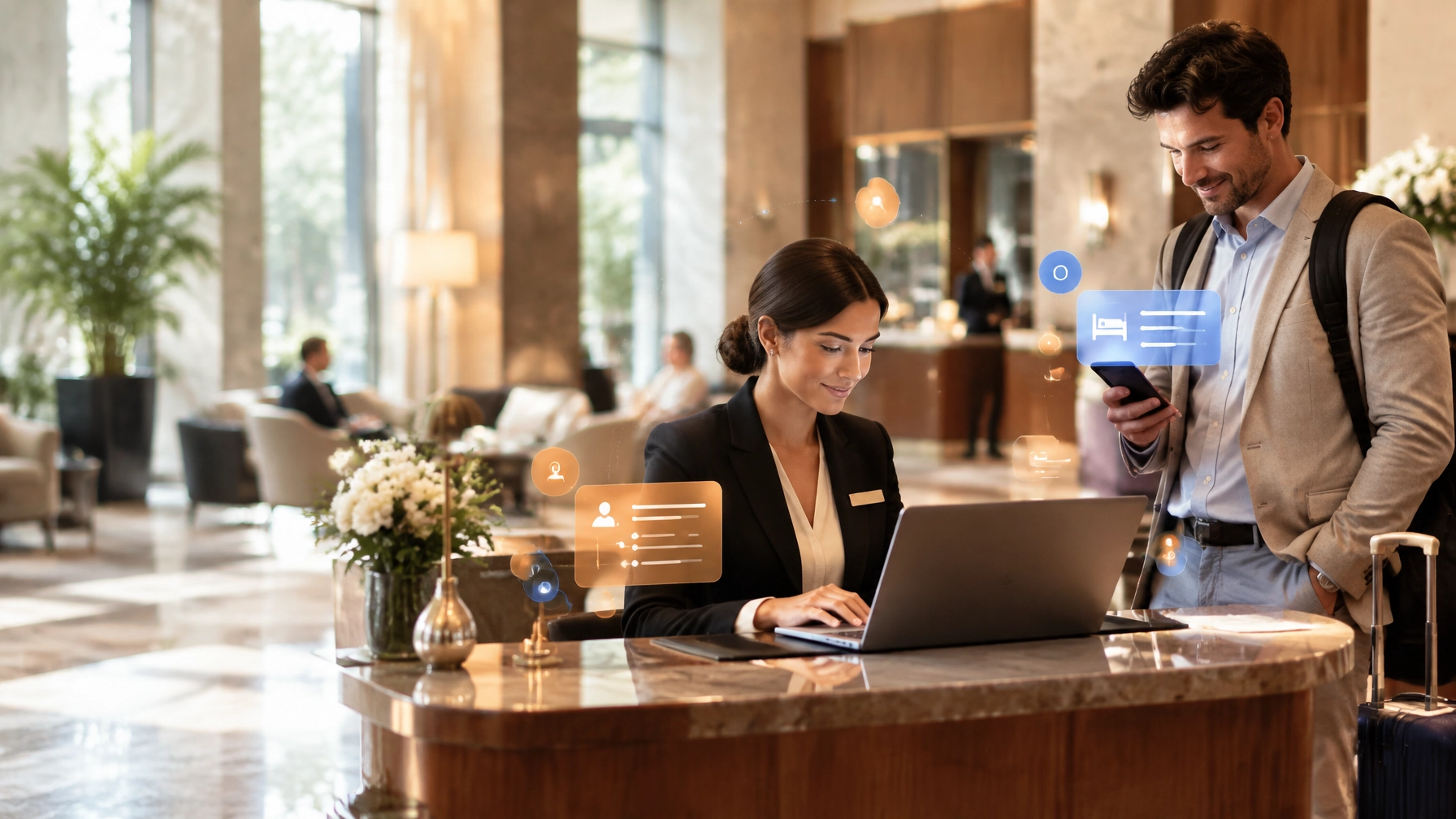
    Reservations staff helping a hotel guest with a smartphone during a booking recovery conversation

    2. Cancellation recovery

    Audience: Guests who cancel a reservation.

    Trigger: Reservation status changes to cancelled.

    Timing: Send a service-focused message shortly after cancellation. A second message can be scheduled later if the cancellation reason suggests the guest may still travel.

    Message: Acknowledge the cancellation, confirm any next steps, and make rebooking easy. If the guest cancelled because of dates, offer alternative dates only when the hotel has enough context to do so responsibly.

    Follow-up: The campaign can ask whether the guest would like help finding another date or room type.

    Reply routing: Refund disputes, date changes outside policy, and emotional complaints should go directly to a trained staff member.

    Exit rule: Stop when the guest rebooks, declines help, opts out, or the cancellation case is closed.

    Outcome: A cancelled booking becomes a service recovery opportunity instead of a dead record.

    3. Guest win-back after checkout

    Audience: Past guests who have stayed at the property but have not returned within a defined period.

    Trigger: A set number of days or months since checkout, or the anniversary of the previous stay.

    Timing: Build a sequence rather than sending one generic offer. Start with a thank-you or useful reminder, then follow with a relevant reason to return.

    Message: Refer to the guest’s relationship with the property: without overstepping privacy expectations. A returning family, business traveller, and honeymoon guest should not receive identical messaging.

    Follow-up: Use WhatsApp for a concise prompt and email for richer details such as packages, room options, or seasonal availability. Voice can be reserved for guests who have explicitly opted into calls or for qualified high-value segments.

    Reply routing: Route booking requests to the reservations workflow. Route complaints or poor-stay feedback to guest relations.

    Exit rule: Stop after a booking, a clear decline, an opt-out, or the defined sequence limit.

    Outcome: More repeat stays and a stronger direct relationship after the guest leaves.

    4. Seasonal promotions

    Audience: Guests whose past behaviour or stay profile matches the promotion.

    Trigger: A campaign date, event calendar, occupancy need, or seasonal period.

    Timing: Start early enough for planning, then use a limited follow-up window. Do not continue sending messages after the promotion expires.

    Message: Make the offer specific. “A summer package” is weaker than a clear proposition tied to the property: room, dates, inclusions, and booking path.

    Follow-up: Let guests ask questions on WhatsApp or by voice. The AI workforce can explain inclusions, check availability, and collect booking details.

    Reply routing: Send negotiated corporate rates, large groups, and special arrangements to the appropriate team.

    Exit rule: Stop when the guest books, the offer expires, inventory closes, or the guest opts out.

    Outcome: Campaigns are linked to occupancy and revenue objectives instead of vanity engagement.

    5. Birthday and anniversary offers

    Audience: Guests with permission to receive personalised communication and a known celebration date.

    Trigger: A defined period before the birthday, anniversary, or previous celebration stay.

    Timing: Give the guest enough time to plan. A reminder closer to the date may follow, but frequency controls matter.

    Message: Keep the offer useful and easy to redeem. Offer a room upgrade, dining experience, celebration setup, or return-stay package only when the property can fulfil it consistently.

    Follow-up: Allow the guest to ask about dates, inclusions, or availability.

    Reply routing: Send special decoration requests, dietary requirements, and complex arrangements to staff.

    Exit rule: Stop after redemption, the event date, a decline, or an opt-out.

    Outcome: A routine date becomes a reason to return and spend more on relevant experiences.

    6. Pre-arrival coordination

    Audience: Confirmed guests approaching arrival.

    Trigger: A reservation reaches a defined pre-arrival window.

    Timing: Common touchpoints include several days before arrival, the day before, and the day of arrival. The exact schedule should match the property’s operation.

    Message: Confirm arrival details, transport needs, check-in questions, dietary information, and optional services.

    Follow-up: The AI workforce can answer common questions, collect arrival times, and offer relevant add-ons such as transfers, breakfast, early check-in, or spa services.

    Reply routing: Escalate accessibility needs, complex transport, complaints, and requests requiring operational approval.

    Exit rule: Stop when the guest checks in, the reservation is cancelled, or the pre-arrival window closes.

    Outcome: Fewer last-minute surprises and a smoother arrival for both guests and staff.

    Luxury hotel room scene with a guest using a smartphone for pre-arrival coordination and service requests

    7. Room upgrades and in-stay upsells

    Audience: Guests with a confirmed booking or an active stay who may be eligible for a relevant upgrade or add-on.

    Trigger: Pre-arrival eligibility, available inventory, a guest request, or an in-stay conversation that signals interest.

    Timing: Present the offer when it makes operational sense. A room upgrade may work before arrival; late checkout may be more relevant during the stay.

    Message: Explain the benefit, price, and conditions clearly. Do not hide availability or create pressure.

    Follow-up: WhatsApp can handle quick confirmations. Voice is useful when the guest wants to discuss options.

    Reply routing: Route inventory exceptions, pricing overrides, and service recovery situations to staff.

    Exit rule: Stop when the guest accepts, declines, checks out, or the inventory is no longer available.

    Outcome: Additional revenue without making the guest feel like every interaction is a sales pitch.

    8. Post-stay rebooking and feedback

    Audience: Guests who have recently checked out.

    Trigger: Checkout completion.

    Timing: Send a thank-you first. Ask for feedback while the experience is still recent, then introduce a return-stay prompt at a separate time.

    Message: Make it easy for the guest to share feedback or begin planning another stay.

    Follow-up: Positive feedback can lead into a rebooking journey. Low ratings should create a service recovery task: not another promotional message.

    Reply routing: Send complaints and sensitive feedback to guest relations or management with the conversation context attached.

    Exit rule: Stop after a booking, review completion, recovery handoff, or opt-out.

    Outcome: The hotel learns from the stay and creates a path to the next one.

    9. Event and wedding lead follow-up

    Audience: Wedding planners, event organisers, corporate groups, and other qualified enquiries.

    Trigger: A form submission, chat enquiry, missed call, or lead created in the CRM.

    Timing: Respond quickly, then follow up according to the lead’s urgency and event date.

    Message: Confirm the enquiry details: event type, dates, guest count, room requirements, and preferred contact method.

    Follow-up: WhatsApp can collect missing information. Voice can qualify the enquiry and answer basic questions. The full context should then move into the sales workflow.

    Reply routing: Group pricing, venue holds, contracts, and negotiations belong with the events team.

    Exit rule: Stop when the lead is qualified, disqualified, converted, or marked as unresponsive.

    Outcome: Fewer valuable enquiries disappear because nobody followed up at the right time.

    Hotel events manager discussing a wedding enquiry with a couple while reviewing details on a tablet

    10. Inactive guest reactivation

    Audience: Guests who have not booked or engaged within a defined period.

    Trigger: No booking, response, or meaningful engagement for a set number of months.

    Timing: Use property-specific intervals. A resort may reactivate guests annually; a city hotel may use a shorter cycle.

    Message: Give the guest a reason to return that reflects their previous relationship with the hotel.

    Follow-up: Test different channels and offers, but maintain a contact frequency limit. A silent guest should not become an over-messaged guest.

    Reply routing: Route interest into reservations and route data correction or privacy requests to the appropriate team.

    Exit rule: Stop after conversion, opt-out, invalid contact information, or the campaign limit.

    Outcome: More value from the guest database without relying on broad, untargeted blasts.

    The safeguards that make automation responsible

    Outbound automation must be permission-based.

    Hotels should record whether a guest has consented to WhatsApp, voice, email, or other promotional communication. Every campaign needs a clear opt-out path. Suppression lists should be updated immediately, not at the end of a monthly review.

    Frequency controls are equally important. A guest receiving a pre-arrival message should not also receive an unrelated promotion on the same day. Campaigns need quiet hours, contact limits, and rules for overlapping journeys.

    The system should also know when not to act.

    Refunds, serious complaints, vulnerable guests, policy exceptions, accessibility requests, and high-value negotiations may require human judgement. A good AI workforce does not try to win every conversation. It recognises the boundary and escalates with the guest’s history, intent, and transcript attached.

    Voxido supports these workflows across voice, chat, WhatsApp, and email in 30+ languages. It can connect with the hotel stack in minutes, use CRM and PMS context, and give teams visibility into campaign activity through integrations and analytics.

    The strategic shift

    The future of hotel communication is not one giant broadcast list.

    It is a portfolio of small, purposeful campaigns: each tied to a guest moment, an operational rule, and a measurable outcome.

    The hotel decides what matters. The AI workforce handles the repetition. Staff take over when the conversation becomes complex or consequential.

    That is the difference between adding another chatbot to a hotel website and building a front desk that never sleeps.

    The hotels that win will not necessarily send the most messages. They will design the clearest journeys: and make sure no valuable guest moment is left waiting for a manual follow-up.

    To see how these workflows can fit your property, explore Voxido for hotels or request a conversation.

  • Top 10 Hotel Campaigns You Can Automate With WhatsApp and Voice

    Top 10 Hotel Campaigns You Can Automate With WhatsApp and Voice

    Most hotels do not have a guest communication problem.

    They have a follow-up problem.

    A guest starts a booking and disappears. Someone cancels a room two weeks before arrival. A past guest says, “We should come back,” then never does. An event planner asks for a proposal, and the enquiry sits in an inbox until the weekend is over.

    The opportunity is usually visible.

    The execution is where revenue leaks.

    Hotel teams are already handling calls, WhatsApp messages, emails, check-ins, room requests, and sales enquiries. Asking the same team to remember every follow-up across every guest segment is unrealistic.

    The answer is not another chatbot waiting on a website page.

    It is a campaign-led hotel guest communication platform that can act on your strategy: identify the right audience, trigger the right workflow, use the right channel, follow up at the right time, and stop when the guest or hotel team takes over.

    With Voxido, hotels can create campaigns across WhatsApp and voice outbound, connected to their CRM, PMS, booking engine, and operating rules. The hotel decides what should happen. The AI workforce executes it.

    The reusable hotel campaign framework

    Every useful campaign can be built using the same structure:

    Audience → trigger → timing → message → follow-up → reply routing → exit rule → revenue outcome

    For example:

    • Audience: Guests who started a direct booking but did not complete payment.
    • Trigger: Booking attempt abandoned.
    • Timing: First follow-up after 30 minutes.
    • Message: A helpful reminder with a direct link to continue.
    • Follow-up: WhatsApp first, voice call for high-value or high-intent leads.
    • Reply routing: Booking questions go to the reservation workflow; complex requests go to staff.
    • Exit rule: Stop when the booking is completed, the guest declines, or the guest opts out.
    • Revenue outcome: Recovered direct booking.

    This framework makes hotel campaign automation practical. It also prevents the common mistake of sending the same promotion to every guest, on every channel, at every hour.

    1. Abandoned booking recovery

    Trigger: A guest begins a booking but leaves before confirmation or payment.

    Ideal channel: WhatsApp first; voice for high-intent or high-value bookings.

    A guest may abandon a booking because the rate is unclear, the payment page is slow, or they simply get distracted. The booking engine sees an incomplete transaction. It does not know how to recover the conversation.

    A campaign can send a short WhatsApp message with the stay dates, room type, and a secure link back to the booking. If the guest replies with a question, Voxido can answer from the hotel’s policies and availability. For a suite, long stay, or urgent arrival date, a voice follow-up may be more appropriate.

    Outcome: More recovered direct bookings and less dependence on OTA conversion.

    Exit rule: Stop after a confirmed booking, a clear decline, an opt-out, or a defined number of attempts.

    Guest using a smartphone beside a laptop in a luxury hotel room, representing abandoned booking recovery

    2. Cancellation recovery

    Trigger: A reservation is cancelled.

    Ideal channel: WhatsApp and voice.

    A cancellation is not always a lost guest. The guest may have changed dates, found a better rate, or cancelled because plans are uncertain.

    The campaign should respond quickly with a simple choice: change the dates, speak to reservations, or receive a future-stay offer. Voice is useful when the booking value is high or the cancellation reason suggests the guest may still want to stay.

    The workflow can also alert the revenue or reservations team when the room is released, so the inventory is available for another recovery campaign.

    Outcome: More rebookings, faster inventory recovery, and fewer empty rooms created by late cancellations.

    Exit rule: Stop when the reservation is rebooked, the guest declines assistance, or the room is moved into a separate inventory recovery workflow.

    3. Guest win-back after checkout

    Trigger: A guest checks out.

    Ideal channel: WhatsApp, followed by voice for selected segments.

    The post-stay relationship should not end when the folio is closed.

    A sensible win-back campaign starts with a thank-you message, then waits. After the right interval: perhaps 45, 90, or 180 days: it can send a relevant reason to return. A family guest may receive a school-holiday package. A business traveller may receive a weekday rate. A couple may receive a weekend experience.

    The campaign uses stay history and CRM data without forcing the hotel team to build every list manually.

    Voxido’s guest win-back workflows are designed to support measurable repeat-booking activity, with the company targeting a potential +22% increase in returning guests across relevant use cases.

    Outcome: More repeat stays and greater ownership of the guest relationship.

    Exit rule: Stop after a booking, a negative response, an opt-out, or a defined campaign window.

    4. Seasonal and promotional offers

    Trigger: A calendar date, occupancy threshold, local event, or property-defined promotion.

    Ideal channel: WhatsApp for segmented offers; voice for VIPs and high-value guests.

    A promotion should not be a mass blast sent because the marketing calendar says so.

    It should be connected to an operating condition. If weekend occupancy is below target, send a weekend offer to nearby leisure guests. If a festival is approaching, target guests who previously travelled during that period. If a last-minute cancellation creates unsold inventory, launch a private recovery offer to opted-in past guests.

    This is where hotel WhatsApp automation becomes more than messaging. It becomes a revenue action linked to demand, inventory, and guest history.

    Outcome: Faster demand generation, more direct bookings, and better control over who receives a discount.

    Exit rule: Stop when inventory is sold, the promotion expires, or the guest has received the maximum permitted number of messages.

    5. Birthday and anniversary campaigns

    Trigger: A guest’s birthday, wedding anniversary, or anniversary of a previous stay.

    Ideal channel: WhatsApp; voice for VIPs or guests with a strong relationship with the property.

    These campaigns work because they are based on relevance rather than urgency.

    A short message can invite the guest to celebrate at the property with a room package, dining credit, spa inclusion, or complimentary amenity. The offer should feel considered: not like a generic discount sent to an entire database.

    The important operational requirement is data quality. Only use dates that the guest has provided with appropriate permission, and give guests a clear way to stop receiving promotional communication.

    Outcome: More emotionally relevant repeat bookings and stronger guest loyalty.

    Exit rule: Stop after the guest responds, books, declines, or does not engage after the planned sequence.

    6. Pre-arrival confirmation and late-arrival coordination

    Trigger: A reservation reaches a defined point before arrival, such as T–72 hours, T–24 hours, or the day of check-in.

    Ideal channel: WhatsApp and voice.

    Pre-arrival messaging is often treated as a confirmation exercise. It should be treated as an operational control point.

    The campaign can confirm dates, arrival time, transport requirements, dietary needs, parking, early check-in, and late arrival. If a guest says their flight is delayed, the response can be routed to the right team or trigger a specific late-arrival workflow.

    This reduces avoidable calls while giving staff better visibility into the arrivals that need attention. It can also support the type of pre-arrival automation that Voxido uses to help hotels target lower no-show rates.

    Outcome: Fewer no-shows, smoother arrivals, and less pressure on the front desk.

    Exit rule: Stop after confirmation, cancellation, or human handoff. Never continue promotional messages inside an unresolved service issue.

    Hotel front desk with luggage and a smartphone, representing arrival confirmation and late-arrival coordination

    7. Room upgrade and in-stay upsell campaigns

    Trigger: A confirmed booking, arrival, or guest request that indicates purchase intent.

    Ideal channel: WhatsApp for clear offers; voice when the guest prefers calling or the request is complex.

    The best upsell moment is rarely a random promotional blast. It is when the guest has already shown a relevant signal.

    Examples include:

    • A guest asking about a sea-view room.
    • A couple mentioning an anniversary.
    • A family asking about extra space.
    • A guest requesting late checkout.
    • A business traveller asking about airport transfer.

    The campaign can offer an upgrade, dining package, spa service, transfer, or late checkout with transparent pricing. It should route operational requests to staff instead of trying to force every conversation through automation.

    Voxido positions its upsell workflows around measurable revenue improvement, with a reported +28% upsell revenue in relevant deployments.

    Outcome: Incremental revenue without making the front desk manually chase every opportunity.

    Exit rule: Stop after acceptance, rejection, inventory depletion, or the end of the relevant service window.

    Luxury hotel suite with a guest using a smartphone, representing room upgrade and in-stay upsell automation

    8. Post-stay rebooking

    Trigger: Checkout plus a defined future interval or a predictable travel period.

    Ideal channel: WhatsApp first; voice for high-value repeat guests.

    A win-back campaign says, “Come back sometime.”

    A rebooking campaign is more specific. It uses the guest’s previous stay, preferred dates, travel pattern, or known season to propose a next visit.

    For example, a resort can follow up with guests who stayed during last year’s summer break. A city hotel can contact weekday business guests before the next conference season. A boutique property can invite a couple to return on the anniversary of their previous visit.

    The message should make direct booking easy and explain the benefit clearly: better flexibility, an included experience, or a property-only package.

    Outcome: More repeat direct bookings and lower future acquisition costs.

    Exit rule: Stop after a confirmed reservation, an explicit decline, or the end of the booking window.

    9. Event, wedding, and group-lead follow-up

    Trigger: A new event enquiry, proposal request, missed call, or incomplete lead form.

    Ideal channel: WhatsApp for qualification and updates; voice for high-intent leads and scheduled sales follow-up.

    Event and wedding leads are too valuable to leave in an inbox.

    A campaign can respond immediately, collect the event date, guest count, room requirements, budget range, and preferred venue, then route the qualified lead to the sales team with a complete summary.

    If a proposal is sent but no response arrives, the campaign can follow up at sensible intervals. A voice call can be triggered for a lead that opened the proposal, requested a callback, or is close to the event date.

    Outcome: Faster response times, more qualified leads, and fewer lost group opportunities.

    Exit rule: Stop when the lead is assigned to a salesperson, the event is booked, the date is unavailable, or the prospect opts out.

    Luxury hotel ballroom prepared for an event with a prospective organiser reviewing a phone

    10. Inactive guest reactivation

    Trigger: No stay, booking enquiry, or meaningful engagement for a defined period.

    Ideal channel: WhatsApp for scale; voice for loyalty members, corporate accounts, or high-value guests.

    An inactive guest is not necessarily a lost guest. They may have moved destinations, changed jobs, or simply stopped hearing from the hotel.

    Start with segmentation. Separate guests by value, location, trip type, room preference, and last interaction. Then create a reason to return that matches the segment.

    The campaign should not pretend the hotel knows why the guest disappeared. It should make a relevant invitation and allow an easy response.

    Outcome: Recovered demand from an owned database instead of paying to reacquire the same guest through an OTA or advertising channel.

    Exit rule: Suppress guests who do not engage after the planned sequence, and remove anyone who opts out.

    Automation needs guardrails

    Good hotel voice automation is not about calling more people. It is about calling the right people, at the right time, for a clear operational or commercial reason.

    Every campaign should include:

    • Explicit permission where required.
    • Clear identification of the hotel or service.
    • A simple opt-out process.
    • Frequency limits and quiet hours.
    • Local WhatsApp and calling-policy compliance.
    • Human escalation for complaints, refunds, vulnerable guests, VIPs, and policy exceptions.
    • A complete audit trail of messages, calls, replies, and handoffs.
    • An exit rule that prevents endless follow-up.

    Voxido connects guest conversations across voice, chat, WhatsApp, and other channels, with integrations for systems such as Cloudbeds, Opera Cloud, STAAH, Salesforce, HubSpot, Twilio, and custom REST or webhook workflows. Its hotel platform, voice AI agent, chat agent, and integrations layer are designed to work around the hotel stack already in place.

    The important shift is strategic.

    Hotels should stop thinking of guest communication as a collection of disconnected replies. A missed booking, an unresolved cancellation, an ignored event lead, and a forgotten past guest are all campaign opportunities.

    The property defines the strategy.

    The AI workforce handles the repetition, timing, routing, and follow-through.

    That is how hotels turn communication from a cost centre into an owned revenue channel: one campaign, one guest segment, and one measurable outcome at a time.

  • 5 Steps to Cut Hotel No-Shows by 42% Using AI Pre-Arrival Calls

    5 Steps to Cut Hotel No-Shows by 42% Using AI Pre-Arrival Calls

    A no-show is not just an empty room.

    It is housekeeping time already allocated, inventory held off the market, a forecast that no longer reflects reality, and revenue that cannot be recovered once midnight passes.

    The uncomfortable truth is that many hotels discover a guest will not arrive only after the arrival window has closed.

    By then, the room is no longer a booking opportunity. It is a write-off.

    The fix is not another generic confirmation email. It is a structured pre-arrival operation that contacts the right guests, at the right time, in the right language, and gives them an easy way to confirm, modify, or cancel.

    With the right workflow, hotels can target a 42% reduction in no-shows from their own baseline. That number should be treated as a property-level performance target, not a universal industry benchmark. Results depend on booking mix, channel, guarantee policy, seasonality, and how consistently the hotel follows up.

    Here are the five steps.

    Why hotel no-shows are difficult to control

    Hotel no-show rates commonly sit between 1% and 5%, according to D-EDGE’s analysis of hotel no-shows. That range sounds small until you apply it to a 200-room property during a high-demand period.

    The bigger issue is that no-shows are often mixed together with late cancellations, failed payment, forgotten bookings, and guests whose plans changed but who never contacted the hotel.

    The operational consequence is the same: your team does not know which rooms will actually arrive until it is too late to act.

    Meanwhile, cancellation rates vary significantly by booking channel. D-EDGE reports rates ranging from 18% to 42%, depending on region and channel. That 42% figure refers to cancellations, not a proven universal reduction from AI.

    The opportunity is to turn uncertainty into a confirmed arrival plan.

    Step 1: Segment bookings by no-show risk

    Do not call every guest with the same message.

    A business traveller who booked a guaranteed room for one night is not the same as a guest with a flexible OTA reservation, no deposit, and a seven-night stay beginning during a major event.

    Your first step is to create risk segments using the booking data already in your PMS or CRS.

    Useful signals include:

    • Booking channel
    • Cancellation and payment terms
    • Deposit status
    • Lead time
    • Guest history
    • Length of stay
    • Arrival date and local events
    • Whether the reservation includes multiple rooms
    • Previous modification or cancellation behaviour
    • Failed or incomplete payment attempts

    A simple starting model could classify reservations as low, medium, or high risk.

    The point is not to build a perfect predictive model on day one. The point is to stop treating every reservation as equally likely to arrive.

    A high-risk guest should receive proactive outreach earlier. A low-risk guest should receive useful information without unnecessary pressure.

    This is where an AI pre-arrival workforce becomes valuable. It can read booking context, apply your rules, and prioritise calls automatically instead of asking the front desk to work through a spreadsheet between check-ins.

    Hotel reservation workspace with a phone, booking calendar, and subtle confirmation interface

    Step 2: Call before the guest forgets the booking

    Timing matters more than message volume.

    D-EDGE recommends a simple communication sequence:

    1. Booking confirmation
    2. Pre-arrival reminder three to seven days before check-in
    3. Day-of reminder

    For higher-risk bookings, add a live or automated voice call during the pre-arrival window.

    A call is particularly useful when the hotel needs a clear answer. “Please confirm your booking” buried in an email is easy to ignore. A short conversation can uncover the actual situation:

    • “Our flight has changed. Can we arrive after midnight?”
    • “We are no longer travelling, but how do we cancel?”
    • “Can we move the booking by one day?”
    • “I thought the room had already been paid for.”
    • “We need to add another guest.”

    These are not edge cases. They are the reasons a reservation becomes a no-show.

    The call should be helpful, not accusatory. A good script confirms the stay, restates the arrival details, explains the hotel’s cancellation terms, and offers a clear next step.

    For example:

    “We are looking forward to welcoming you on 18 September. Your arrival is scheduled for 3 p.m. We wanted to check that your plans are unchanged. If your timing has shifted, I can help update the reservation or note a late arrival.”

    That tone protects the guest relationship while giving the hotel an answer early enough to act.

    Step 3: Make confirmation, modification, and cancellation easy

    The worst pre-arrival workflow is one that forces guests to contact three different departments.

    If the guest wants to confirm, the system should record it.

    If they need to modify their arrival time, the request should reach the right team.

    If they need to cancel, the hotel should learn about it while the room can still be resold.

    Voxido’s hotel agents can handle voice, chat, WhatsApp, SMS, and email across 30+ languages, using one shared property knowledge base. The guest can respond on the channel they already use, while the hotel retains one operational record.

    The workflow should capture at least:

    • Arrival confirmation
    • Expected arrival time
    • Cancellation intent
    • Date-change request
    • Number of arriving guests
    • Special requirements
    • Transfer or transportation needs
    • Escalation requirements
    • Payment or policy questions

    The AI should not invent exceptions or make unauthorised promises. It should follow the hotel’s policies and hand off sensitive cases to staff with the guest’s details and conversation summary attached.

    That is the difference between automation and an unattended chatbot.

    The system is doing the repetitive work. Human staff still control policy decisions, service recovery, refunds, and exceptions.

    Step 4: Recover the room when the answer is “no”

    A cancellation is not automatically a loss.

    If the hotel learns about it three days before arrival, the room can be returned to inventory, offered to a waitlist, promoted through direct channels, or repriced based on demand.

    This is where pre-arrival calls connect directly to revenue management.

    A practical recovery workflow looks like this:

    1. The AI identifies a guest who will not arrive.
    2. The booking is updated or routed to the reservations team.
    3. Inventory is released according to hotel policy.
    4. The room is offered to waitlisted guests or targeted demand segments.
    5. Pricing and distribution teams receive the updated availability.
    6. The original guest receives clear confirmation of the change.

    The hotel should also record why the guest cancelled. “Flight disruption,” “found a cheaper rate,” “illness,” “duplicate booking,” and “unclear policy” are very different operational signals.

    Over time, those reasons improve your cancellation policy, payment terms, arrival instructions, and channel strategy.

    As Thomas Roche, D-EDGE’s Lead Product Manager of Payment, explains in the company’s no-show guidance, hotels should separate pricing strategy from cancellation policy and use prepayment thoughtfully. The goal is not to punish guests. It is to create commitment while keeping the booking experience fair and transparent.

    Warmly lit hotel lobby at night with a front desk phone and subtle occupancy interface overlays

    Step 5: Measure the complete pre-arrival funnel

    “No-shows are down” is not enough.

    A hotel needs to know which part of the process created the improvement.

    Track the funnel from reservation to arrival:

    • Reservations eligible for outreach
    • Calls attempted
    • Calls answered
    • Guests reached in their preferred language
    • Confirmations received
    • Arrival times captured
    • Modifications processed
    • Cancellations identified before arrival
    • Rooms successfully resold
    • Final no-show rate
    • Revenue protected or recovered

    Start with a baseline.

    For example, if your property records 100 no-shows from 2,000 eligible reservations, your baseline no-show rate is 5%. A 42% reduction would bring that down to 58 no-shows: a reduction of 42 reservations.

    Then measure the result by segment, not only in aggregate. A workflow may perform exceptionally well for direct bookings but poorly for OTA reservations. It may reduce no-shows for leisure travellers while having little effect on group bookings.

    Voxido’s analytics platform is designed to turn guest conversations into measurable operational signals. Every interaction can be reviewed for intent, sentiment, escalation, missed opportunities, and outcome.

    That lets a revenue manager answer practical questions:

    • Which channels produce the most uncertain arrivals?
    • Which scripts lead to more confirmations?
    • Which languages have the highest contact rate?
    • How many cancellations were identified early enough to resell?
    • Which policy questions create the most friction?
    • How much staff time was removed from repetitive follow-up?

    The aim is not to produce another dashboard nobody opens.

    The aim is to find the exact point where a reservation becomes recoverable revenue.

    The operating model: AI handles the repetition, staff handle the exceptions

    A pre-arrival call should never feel like a collection agency.

    It should feel like a front desk that never sleeps: checking the details, anticipating problems, answering in the guest’s language, and making sure the property knows what is happening before arrival day.

    Voxido connects to the hotel stack through integrations and APIs, reads reservation context, contacts guests across voice and messaging channels, and escalates when human judgement is needed. Setup can begin with one workflow: such as high-risk pre-arrival calls: before expanding into confirmations, upgrades, transfers, and late-arrival coordination.

    You can review the broader Voxido hotel platform, explore the voice AI agent, or estimate the cost of missed guest communication with the missed-call revenue calculator.

    The strategic question for hotel operators is no longer whether guests should receive a reminder.

    It is whether your hotel can afford to wait for the guest to tell you they are not coming.

    The properties that win will not eliminate flexibility. They will make uncertainty visible early enough to do something with it.

  • 5 Steps to Cut Hotel No-Shows by 42% Using AI Pre-Arrival Calls

    5 Steps to Cut Hotel No-Shows by 42% Using AI Pre-Arrival Calls

    Let’s talk about an uncomfortable truth in modern hospitality: in an era of record ADRs and sky-high demand, nothing burns cash faster than a ghost reservation.

    You’ve seen it happen on a Friday night. Your PMS says 100% occupancy. Over-the-air channels are humming, walk-ins are being turned away at the door, and your housekeeping team is primed for a full house. Then, midnight rolls around. Five rooms sit empty. The guests aren't coming, they didn’t call, and their flexible booking policies have effectively turned your high-value inventory into dead air.

    Multiply that across 30 days, and thousands of dollars in pure margin vanish into thin air.

    For years, hotel general managers have accepted no-shows as the cost of doing business. "It’s just OTA friction," they say. "Guests change their minds."

    That logic is bankrupt. In today’s competitive market, relying on hope and an automated email confirmation to secure a $400 room night is operational negligence. If you want to protect your bottom line, you need to fix the front end of your guest journey. And no, another static chatbot on your website isn't going to cut it.


    The Problem: Why Traditional Confirmation Emails Are Failing

    Let’s look at why no-shows happen in the first place.

    Most hotels rely on email sequences sent 48 hours prior to arrival. These emails get buried under promotional newsletters, flight alerts, and work spam. Even when opened, they require active friction: the guest has to click a link, log into a portal, and manually confirm or modify their plans.

    Human beings are naturally lazy and perpetually busy. If confirming requires three clicks, they won't do it.

    Worse, your front desk staff are too overwhelmed managing live check-ins, guest complaints, and luggage delivery to manually call upcoming arrivals. Front desk agents are firefighters, not telemarketers. When phone lines ring unanswered, unconfirmed bookings slip right through the cracks.

    The consequence? Empty rooms, lost ancillary spend, and missed opportunities to resell inventory to eager waitlist guests.

    To solve this, leading operators are deploying an ai voice assistant for hospitality that operates like a dedicated revenue guardian: calling, confirming, and securing commitments autonomously before guests ever step foot on property.


    The Solution: Deploying an AI Workforce for Pre-Arrival

    This isn't about setting up a clunky interactive voice response (IVR) tree that makes guests want to throw their phones against the wall. We are talking about human-grade conversational AI.

    When powered by an enterprise-grade ai receptionist for hotels, your property can execute intelligent outbound outreach across voice and WhatsApp in over 30 languages. It speaks naturally, understands intent, integrates directly with your property management system (PMS), and handles hundreds of simultaneous calls without breaking a sweat.

    Hotels leveraging structured pre-arrival AI workflows see an immediate drop in vacant rooms: often cutting no-shows by up to 42% within the first month.

    Here is the exact 5-step playbook to make it happen at your property.


    Hotel concierge in a luxurious lobby representing 24-hour multilingual guest support and pre-stay coordination


    Step 1: Establish Your Pre-Arrival Touchpoint Schedule

    Timing is everything in guest communication. If you reach out too early, the guest forgets. If you reach out too late, they’ve already made alternative arrangements or ghosted.

    A high-performing hotel call automation workflow staggers touchpoints based on booking risk and lead time:

    1. Instant Confirmation (Omnichannel): Send an immediate confirmation across SMS, WhatsApp, and email the moment a booking is logged.
    2. The 72-Hour Pre-Stay Check: For standard leisure bookings, initiate a natural WhatsApp or voice touchpoint to confirm travel details.
    3. The 24-Hour Final Lock-In: For high-risk, OTA, or flexible bookings, trigger a direct outbound voice call or WhatsApp message to re-verify arrival time and secure final commitment.

    By spacing out touchpoints intelligently, you keep your hotel top-of-mind without annoying the guest.


    Step 2: Segment and Prioritize High-Risk Reservations

    Not all bookings carry the same risk profile. A corporate guest booking directly via your engine with a corporate card rarely no-shows. Conversely, a last-minute OTA booking with a flexible cancellation policy and a history of zero prior engagement is a prime candidate for a ghost stay.

    Use your AI operating layer to automatically segment incoming reservations:

    • Flag Flexible OTAs: Prioritize outbound voice verification for third-party channels.
    • Identify Short Lead Times: Bookings made less than 48 hours in advance often suffer from communication gaps regarding late check-in procedures.
    • Track Historical Patterns: Automatically flag guest profiles with prior cancellation anomalies.

    When your AI workforce knows who to call first, your conversion efficiency skyrockets.


    Unified platform overview showing automated guest journey triggers, analytics, and multi-channel orchestration


    Step 3: Script Your AI Agent Around Four Core Objectives

    When the AI places a pre-arrival call or chats via WhatsApp, the conversation shouldn't be open-ended or confusing. It must be laser-focused on four operational objectives:

    1. Confirm Arrival Time: "Hi Sarah, this is the front desk calling to confirm you're still arriving tomorrow around 3 PM?"
    2. Clarify Policies: Gently remind guests of cancellation deadlines and late-night arrival protocols.
    3. Capture Special Requests: Inquire about dietary restrictions, pillow preferences, or early check-in needs, instantly logging them into the PMS.
    4. Drive Pre-Arrival Upsell: Offer a seamless room upgrade or airport transfer before they arrive, turning a potential no-show risk into an ancillary revenue win.

    If the guest states they need to cancel, the AI instantly triggers Step 5.


    Step 4: Integrate Deeply with Your Hotel Tech Stack

    An AI agent that operates in a silo is useless. If your voice assistant confirms a guest's arrival time but fails to update your PMS, your front desk team remains in the dark.

    For hotel no-show reduction to succeed, your AI workforce must integrate natively with your core hotel stack: whether that’s Opera, Cloudbeds, Mews, or protel.

    When a guest confirms via voice or WhatsApp, the reservation status updates instantly. When a guest requests an upgrade, the folio updates automatically. Human staff only step in when complex exceptions arise, allowing your team to focus entirely on high-touch hospitality.


    Professional AI front desk agent in a luxury hotel lobby assisting guests


    Step 5: Automate Inventory Recovery and Waitlist Reassignment

    What happens when a guest explicitly tells your AI assistant that they cannot make the trip?

    In a manual environment, that cancellation might sit in an unread email inbox for hours. By the time someone processes it, the room is unsellable.

    With automated pre-arrival workflows, the moment a cancellation is confirmed:

    1. The room is instantly released back into active inventory across your booking engine and OTAs.
    2. The AI automatically triggers a broadcast to your waitlist or local corporate partners via WhatsApp.
    3. High-demand weekend slots are re-sold within minutes rather than hours.

    You stop losing revenue to empty inventory and start capturing last-minute demand effortlessly.


    The Strategic Outlook: Guest Commitment in the Age of AI

    The hotels winning tomorrow aren't the ones with the largest marketing budgets or the flashiest lobbies. They are the ones that eliminate operational friction.

    No-shows aren't an unavoidable tax on hospitality. They are a symptom of broken communication loops. By deploying an intelligent AI workforce to handle pre-arrival confirmations, voice outreach, and instant inventory recovery, you transform an administrative headache into a predictable revenue engine.

    The question isn't whether your hotel can afford to implement AI pre-arrival calls.

    In a high-occupancy market where every vacant room represents pure lost profit, the real question is: how many thousands of dollars are you willing to leave on the table this weekend?

  • Beyond the Bot: Why India’s Top Hotels are Switching to Agentic Voice and WhatsApp Outreach

    Beyond the Bot: Why India’s Top Hotels are Switching to Agentic Voice and WhatsApp Outreach

    India is building luxury hotels faster than it can train the leaders to run them.

    Walk into any five-star lobby in Mumbai or Bangalore, and the "hard product" is breathtaking. The marble is imported. The chandeliers are custom. The room rates are at an all-time high.

    But pick up the phone to request a late check-out at 8:00 AM, or send a WhatsApp message asking for the airport transfer details, and the "soft product" often crumbles.

    A missed call. A "seen" message with no reply for forty minutes. A scripted chatbot that keeps loop-de-looping you back to the main menu.

    In a market where luxury is defined by "feeling cared for," Indian hospitality is facing a silent crisis: the communication gap.

    At Voxido, we’ve spent years watching hotels try to fix this with "bots." It didn't work. Now, the industry is shifting to something entirely different: Agentic AI.

    The Uncomfortable Truth About the "Missed Call"

    Most GMs don't want to admit how many calls their front desk actually misses.

    During peak check-in hours, the staff is overwhelmed. The phone rings, the guest in front of them is complaining about their key card, and the caller on the other end, a potential direct booking worth ₹50,000, hangs up and goes to an OTA instead.

    Traditional chatbots were supposed to solve this. But they were just digital filing cabinets. They could answer "What time is breakfast?" but they couldn't actually do anything.

    If a guest wanted to change their booking or request a specific room type, the bot would hit a wall and say: "Please wait for an agent."

    The guest waits. The frustration grows. The brand "luxury" evaporates.

    A high-end luxury hotel front desk at night with a digital overlay of an AI voice agent handling a call in real-time.

    Why "Agentic" is the Only Way Forward

    The difference between a "chatbot" and an "AI Agent" is the difference between a signpost and a concierge.

    An agentic system doesn't just talk; it acts. It has "agency."

    When a guest sends a WhatsApp to a Voxido-powered hotel, they aren't talking to a script. They are talking to an AI workforce that is deeply integrated into the hotel’s stack.

    • It knows the guest: Because it’s connected to a built-in CRM, it knows this is Mr. Sharma’s third stay and he prefers a high-floor room.
    • It has the tools: It can buy and manage local numbers instantly, allowing for localized outreach that doesn't look like spam.
    • It closes the loop: If a guest asks for a bucket of ice on WhatsApp, the agent doesn't just say "Okay." It triggers a task in the housekeeping system and follows up ten minutes later to ensure it arrived.

    This is why we call Voxido an agentic company. We don't just provide a chat window; we provide the entire engine: CRM, number provisioning, and the intelligence to use them.

    The Grit of Operations: Making it "Super Simple"

    Indian hotel owners are tired of "tech projects" that take six months to deploy. They need solutions that work by next Tuesday.

    We designed Voxido to be configured in minutes, not months. Whether it’s a boutique heritage property in Rajasthan or a 500-key business hotel in Gurgaon, the setup is the same:

    1. Pick your use case: Is it voice-based room service? WhatsApp-based pre-arrival coordination? Outbound lead capture?
    2. Connect your stack: We integrate with your existing PMS and hotel tools instantly.
    3. Go live: Your "AI employee" starts taking calls and messages in 30+ languages, 24/7.

    A modern CRM dashboard on a tablet in a luxury hotel suite, showing guest leads captured and automated follow-ups via WhatsApp.

    Beyond Support: The Revenue Outreach Engine

    Most hotels view WhatsApp as a support channel. That’s a massive missed opportunity.

    The real power of an agentic workforce lies in proactive outreach.

    Imagine an AI agent that monitors your website lead capture. When a high-value guest drops off the booking engine, the agent triggers a personalized WhatsApp message (via a dedicated number you bought through our platform) offering a limited-time perk for booking direct.

    No human staff needed. No manual typing. Just 3.4× more site-to-demo conversions and a significant jump in direct revenue.

    This isn't "marketing automation." This is a specialized Upsell Manager that works while your team sleeps.

    An infographic-style overview of the Voxido AI guest journey, from search to post-stay, highlighting automated task routing and multi-channel coverage.

    The Shift in Guest Psychology

    By 2026, the guest's expectation of "service" has shifted. They no longer want to talk to a human for basic transactions. They want speed. They want accuracy.

    They want to know that when they ask for a 6:00 AM airport drop, it’s done, not just "noted."

    When you use a platform like Voxido, you aren't replacing the human touch; you’re protecting it. By letting AI handle the 80% of repetitive, transactional communication, you free up your front desk to actually look the guest in the eye when they walk through the door.

    That is how you bridge the gap between imported marble and world-class service.

    A luxury hotel infinity pool at dusk with a UI overlay showing a chart of increased direct bookings and revenue insights.

    The Question for Indian Hoteliers

    We are reaching a tipping point in the Indian market.

    As room rates continue to climb and the talent pool continues to shrink, the hotels that rely solely on human-powered front desks will inevitably see their CSAT scores dip.

    The question isn't whether you will use AI. The question is: Will you use a bot that just talks, or an agent that actually works?

    The front desk of the future doesn't sleep, it doesn't miss calls, and it speaks 30 languages. It’s time to move beyond the bot.

  • Agentic Governance Matters: Why Your Hotel Needs an AI “Operating Layer” After HITEC 2026

    Agentic Governance Matters: Why Your Hotel Needs an AI “Operating Layer” After HITEC 2026

    Most of what HITEC 2026 showed was still surface-level.

    More channels. More bots. More demos.

    But hotel operations do not break because you lack one more chatbot. They break when bookings, service requests, upsells, and guest messages live in separate systems that do not coordinate.

    That is the uncomfortable truth.

    AI is getting better at talking. Hotels still struggle with getting it to act safely, consistently, and across the whole guest journey.

    That is why the real conversation after HITEC is not about adding another tool. It is about building an operating layer that governs what happens when AI starts making decisions inside live hotel operations.

    The Real Problem: More Automation, More Operational Risk

    For years, hospitality ai technology sat on the surface.

    It answered FAQs. It deflected calls. It looked useful in a demo.

    Now it does more. It handles rebooking. It coordinates housekeeping. It pushes upsells. It works across WhatsApp, email, web chat, and voice.

    That sounds like progress. It is also where the risk starts.

    High-quality photo of a luxury hotel front desk with automated task routing UI overlays in Voxido orange and blue.

    Once AI can take action, weak coordination becomes expensive.

    One system promises late checkout. Another misses the note. One channel offers an upgrade. Another quotes the wrong rate. A guest asks in Spanish on WhatsApp and calls in English ten minutes later, and your tools behave like strangers.

    That is the consequence of disconnected automation.

    Not bad branding. Bad operations.

    The Solution: Agentic Governance That Works on the Ground

    Agentic governance sounds abstract. In practice, it is simple.

    It is the set of rules, permissions, and controls that keeps automated guest operations inside safe boundaries.

    Here are the three pieces that matter:

    1. Decision Boundaries

    A hotel should not let automation improvise on refunds, discounts, or exceptions.

    The rule can be simple: approve late checkout for loyalty guests, but route discounts above 15% to staff.

    That is governance.

    2. Circuit Breakers

    Some conversations should stop being automated fast.

    Complaint escalation. Payment disputes. Legal issues. Repeated misunderstanding.

    A good operating layer knows when to hand off.

    3. Observability and Accountability

    If a system cannot show why it made a decision, it does not belong in guest operations.

    You need a trail. What was offered. Why it was offered. What happened next.

    With our analytics platform, we track more than 60 data points per interaction so teams can audit performance instead of guessing.

    High-quality photo of a guest in a luxury hotel room using a mobile phone with WhatsApp-style UI overlays in Voxido orange and blue.

    Why We Built Conversation OS

    We did not build for the demo moment.

    We built for the messy middle of hotel operations.

    Most vendors sell isolated tools. We built Conversation OS as the layer underneath the work itself.

    That matters when the same guest moves between channels, languages, and moments of the stay.

    This layer handles the unglamorous parts that operations teams actually care about:

    • Unified guest context: So WhatsApp, voice, and email do not contradict each other.
    • Task routing: So extra towels, late checkout, and upsell requests move into the right systems without manual chasing.
    • Multilingual consistency: So communication across 30+ languages still sounds like your property, not three different vendors stitched together.

    This is what a front desk that never sleeps actually requires.

    Not more chat surfaces.

    Better coordination.

    What Smart Operators Should Ask Next

    If you are evaluating AI after HITEC, skip the surface questions.

    Do not ask whether a tool can answer messages.

    Ask whether it can coordinate decisions across the entire guest journey without creating more operational debt.

    Ask what happens when channels conflict.

    Ask where the handoff rules live.

    Ask who can audit the logic.

    Because the next advantage in hospitality will not come from who bought AI first.

    It will come from who built the operational layer that keeps automation reliable when the lobby is full, the phones are ringing, and every guest expects an answer now.

    A year from now, will hotels be competing on who has AI, or on who can govern it well enough to trust it with revenue, service, and brand standards?

  • Agentic Governance Matters: Why Your Hotel Needs an AI “Operating Layer” After HITEC 2026

    Agentic Governance Matters: Why Your Hotel Needs an AI “Operating Layer” After HITEC 2026

    Field notes | Time: 8 min read | Read while the kettle boils.

    If you walked the floor at HITEC 2026 last month, you likely felt it: the noise. Every booth promised a smarter hotel ai agent, a faster chatbot, or a more "human" voice. But as the dust settles and we all head back to our properties, a different reality is setting in.

    It’s easy to buy a "shiny" AI tool. It’s significantly harder to manage a fleet of autonomous agents that are actually trusted to handle your guests, your revenue, and your brand reputation 24/7.

    At Voxido, we’ve spent the last year shipping and learning alongside some of the world’s most demanding hotel operators. What we’ve discovered is that the industry is moving past the "bot" phase. We are entering the era of Agentic Governance.

    If your hotel doesn't have an "operating layer": a central intelligence that governs how these agents behave: you aren't just risking a bad guest experience; you’re risking your entire operational flow.

    The Post-HITEC 2026 Reality: Beyond the Surface

    For years, hospitality ai technology was treated like a skin: a thin layer of chat or voice added on top of existing systems to deflect calls. It was unglamorous, often clunky, and mostly focused on FAQs.

    But today’s hotel ai automation is different. Agents are now "agentic." This means they don't just talk; they do. They rebook guests, coordinate with housekeeping, trigger upsells, and manage complex multi-step workflows across WhatsApp, email, and voice.

    Visual overview of Voxido’s Conversation OS showing automated guest interactions across the entire journey.

    The problem? When you give an AI the power to act, you need a way to govern those actions. Without a dedicated operating layer, you're essentially hiring a hundred new employees and giving them the keys to the building without any supervision.

    What is Agentic Governance? (And why it’s practical, not hype)

    Agentic governance sounds like a mouthful, but it’s actually a very "grit-on-the-ground" concept. It’s the framework of policies and technical controls that ensure your AI agents stay within their lanes.

    Think of it as the "manager" for your conversational ai for hotels. Here are the three pillars we focus on:

    1. Decision Boundaries

    You wouldn't let a new front desk trainee authorize a $500 refund without checking with a manager. Your AI shouldn't either. Governance allows you to set "decision boundaries." For example: The agent can offer a late checkout for free if the guest is a loyalty member, but any room discount over 15% requires human sign-off.

    2. Circuit Breakers

    In the world of hotel guest communication platforms, things move fast. A "circuit breaker" is a safety valve. If an agent detects a frustrated guest or a complex legal query, the governance layer automatically halts the AI's autonomy and loops in a human staff member instantly. It’s about knowing when to step back.

    3. Observability & Accountability

    You can't manage what you can't see. A true operating layer provides a "paper trail" for every decision an agent makes. Why did it offer that specific upsell? Why did it prioritize one maintenance request over another? With our analytics platform, we track over 60 data points for every interaction, turning "black box" AI into a transparent, accountable team member.

    Infographic showing the end-to-end guest journey powered by Voxido’s governed AI platform.

    The Voxido "Operating Layer": Why We Built Conversation OS

    We didn't set out to just build another bot. We built Conversation OS.

    Most vendors sell you a tool; we provide the infrastructure. Our voice AI agents and chat interfaces aren't standalone products: they are "apps" running on a unified operating layer.

    This layer handles the unglamorous but essential work:

    • Unified Guest Profiles: Ensuring the AI on WhatsApp knows what the AI on the phone just promised the guest.
    • Task Routing: Automatically sending a guest's request for extra towels directly into your PMS or housekeeping software without a human ever touching a button.
    • Multilingual Fluidity: Governing communication in 30+ languages while maintaining your brand’s specific tone of voice.

    We’re not just building technology for the sake of it. We’re building a front desk that never sleeps, powered by a system that understands the nuances of a 40% reduction in no-shows and a 28% boost in upsell revenue.

    A vertical shot of a luxurious, quiet hotel lobby at night, representing the reliable 'front desk that never sleeps.'

    Field Notes: How to Transition to an Operating Layer

    If you're a GM or Owner looking to move beyond surface-level AI, here’s a quick-win checklist for your next strategy meeting:

    • Inventory Your Agents: Stop looking at "chat" and "voice" as separate silos. Ask: "Do these tools talk to each other?" If they don't, you don't have a platform; you have a collection of gadgets.
    • Define Your "Human-in-the-Loop" Thresholds: Be specific. At what point should the AI stop? Is it after two failed attempts to understand a guest? Is it when a guest mentions a specific keyword like "manager" or "unacceptable"?
    • Demand Data Transparency: If your provider can't show you the logic behind an agent's action, it’s a liability.

    A Shared Journey

    We’re still learning every day. Every property we onboard teaches us something new about the "grit" of daily operations: from the chaos of a 2 PM check-in rush to the complexity of multi-lingual reputation management.

    The goal isn't to replace your staff. It's to give them the breathing room to be human again. When the "operating layer" handles the 80% of repetitive, high-volume tasks, your team can focus on the 20% that requires true hospitality.

    A professional digital portrait of a Voxido AI agent, ready to assist 24/7.

    We’d love to keep you in the loop as we continue shipping new features to Conversation OS. If you’re ready to see how a governed AI layer can change your property, book a demo with us and let’s talk about the reality of your front desk, not just the hype.

    Stay grounded, keep shipping.

    ( The Voxido Team)

  • How to Onboard Your AI Front Desk Agent in 5 Minutes

    How to Onboard Your AI Front Desk Agent in 5 Minutes

    Time commitment: Quick win
    Reading level: Field notes
    Read while the kettle boils

    Let’s be honest: hiring for the front desk is exhausting. You post the ad, you sift through resumes, you interview three people who don't show up, and then you finally find someone. Then comes the "training." Two weeks of shadowing, three weeks of "oops, I forgot how to check the PMS for that specific rate code," and by month three, they’ve found a job that pays fifty cents more an hour across the street.

    The revolving door of hospitality staffing isn't just a headache; it’s a leak in your bucket. Every missed call is a lost booking. Every slow WhatsApp reply is a guest booking on an OTA instead of your direct site.

    At Voxido, we’re learning that the solution isn’t just "hiring better." It’s shipping a front desk that never sleeps, never quits, and speaks 30+ languages fluently. And the best part? You can "hire" her in less time than it takes to check in a single grumpy guest.

    The 5-Minute "Hire" (Connecting the Stack)

    When we say 5 minutes, we aren't using marketing fluff. We’re talking about practical, unglamorous utility.

    Most "tech solutions" for hotels require a dedicated IT team, three months of development, and a prayer to the integration gods. We built Voxido to be the opposite.

    A minimalist visualization of hotel stack integration connecting PMS, WhatsApp, and Voice

    Onboarding is a simple mapping exercise. You connect your existing stack: whether you’re using Cloudbeds, Hostaway, Salesforce, or a custom PMS: and point our agents to your calendar and brand voice. There’s no code to write. You’re just linking the systems you already use.

    By the time you’ve finished your coffee, your AI agent is already "in the building," ready to handle voice calls, web chats, and WhatsApp threads.

    The 24-Hour Shift: Learning the Property

    A human staff member takes weeks to learn that the spa closes at 8 PM on Sundays or that Room 412 has the best view of the valley.

    Your Voxido agent, like Mira (our Front Desk specialist), learns your entire property in exactly one day. You feed her your SOPs, your restaurant menus, your pet policies, and your spa offers. She doesn't just read them; she internalizes them.

    Because we use evidence-gated AI, she doesn't "hallucinate" or make up facts. If your menu says the Sazerac restaurant closes at 11 PM, she’ll tell the guest 11 PM. If she doesn't know an answer, she doesn't guess: she hands the conversation to a human with a full transcript attached.

    • Mira (Front Desk): Handles bookings, check-in questions, and availability.
    • Aria (Concierge): Manages in-stay requests in 30+ languages.
    • Kabir (Pre-arrival): Coordinates with guests before they arrive to slash no-shows by 40%.

    Meet Mira: Your New Best Employee

    Mira doesn't take lunch breaks. She doesn't get flustered when three calls come in at once while a line of guests is waiting at the physical desk.

    AI front desk agent in a luxury hotel lobby representing Mira

    When a guest calls or chats, Mira picks up in under 500ms. She can check live availability, hold a room, and even upsell a dinner reservation in the same breath. She’s the ultimate "Quick win" for your property.

    While your human staff handles the high-touch, emotional work of hospitality: the "welcome home" moments: Mira handles the grit:

    • "Is there a room for tonight?"
    • "Can I get a late checkout?"
    • "What's the Wi-Fi password?"
    • "Can I book a table for two at 7?"

    The Immediate Impact: Real Metrics, No Hype

    We’re not interested in being an "untouchable authority" on tech. We’re in the trenches with you, looking at the numbers. When you ship an AI agent like Mira or Kabir, the impact is instant.

    A minimalist UI card showing upward trending direct bookings and reduced costs

    Here’s what our partners are seeing within the first 30 days:

    1. +15% Direct Bookings: Mira captures leads that usually die on the "missed call" vine. If you're curious what those missed calls are costing you, try our Missed Call Revenue Calculator.
    2. -40% No-Shows: Kabir handles the pre-arrival nudges, ensuring guests actually show up.
    3. -38% Cost per Contact: AI talk-time is significantly cheaper than a per-seat call center or a 24/7 human shift.
    4. 100% Review Reply Rate: Riya (our Reputation Manager) ensures no guest feedback goes unanswered.

    Framing the Journey

    Transitioning to an AI-powered front desk isn't about replacing people; it’s about giving your people their sanity back. It’s about creating a "front desk that never sleeps" so your managers can actually get some rest.

    We’re keeping you in the loop as we continue to refine these agents. Every day, they’re learning, and every week, we’re shipping new ways to make your property run smoother.

    If you’re tired of the hiring carousel and ready to see what 24/7 multilingual support looks like for your hotel, let's chat. It only takes five minutes to start.

    Book a demo and meet Mira today.

    Voxido Logo

  • How to Automate Your Entire WhatsApp Guest Journey in Under 5 Minutes

    How to Automate Your Entire WhatsApp Guest Journey in Under 5 Minutes

    Let’s be honest: hospitality can be messy. Your front desk is juggling three check-ins, a ringing phone, and a guest who just realized they forgot their toothbrush. In the middle of that chaos, "automation" often sounds like another expensive, six-month project that will probably break the day you go live.

    But here’s the thing, it doesn’t have to be. We’ve been learning and shipping fast here at Voxido, and we’ve realized that the most powerful tool in your tech stack is already in your guest’s pocket.

    WhatsApp has a 98% open rate. If you aren’t using it to talk to your guests, you’re essentially leaving a "Do Not Disturb" sign on your revenue. In this field note, we’re showing you how to flip the switch on hotel whatsapp automation in the time it takes to brew a pot of coffee.

    Read while the kettle boils.


    Quick Wins: The "5-Minute" Reality Check

    When we say "under 5 minutes," we aren’t talking about a flashy marketing gimmick. We’re talking about the reality of modern API integrations. Most of the "work" has already been done by our engineering team behind the scenes.

    To get your hotel guest engagement platform up and running, the process looks like this:

    1. Connect Your PMS: We integrate with your existing hotel stack (Mews, Cloudbeds, Opera, etc.) in minutes.
    2. Activate Aria: Meet Aria, your new AI Concierge. She’s already trained on thousands of hotel interactions.
    3. Go Live: Toggle the WhatsApp channel on, and Aria begins monitoring your guest list.

    A minimalist dashboard showing a successful connection between a hotel icon and a chat bubble

    That’s it. No coding, no hiring a "prompt engineer," and no massive manual to read. It’s practical, slightly unglamorous, and incredibly effective.


    The Journey: From "Booked" to "Bitten by the Travel Bug"

    Automation isn’t just about answering FAQs (though we do that, too). It’s about being there for the guest at every touchpoint without your staff having to lift a finger.

    1. Pre-Arrival: The 40% No-Show Reducer

    The journey starts the moment the booking is confirmed. Aria sends a friendly WhatsApp message 48 hours before check-in. It’s not a generic email that lands in a promotions folder; it’s a direct line.

    • The Utility: Digital check-in links, parking info, and "How can we make your stay better?"
    • The Revenue: This is where you offer that room upgrade or the airport transfer. Statistics show that pre-arrival is the highest-converting moment for upsells. When a guest is 24 hours away from their vacation, that $30 balcony upgrade feels like a steal.

    2. In-Stay: The AI Concierge That Never Sleeps

    Once the guest is on-property, Aria shifts gears. She becomes an ai concierge for hotels that lives in their pocket.

    Need extra towels? Ask Aria. Want to know when the pool closes? Aria knows. Looking for the best sourdough in the neighborhood? Aria’s got a list.

    A luxury hotel room with a floating UI element suggesting a sparkling upgrade

    By handling the "boring" stuff, the 50th request for the Wi-Fi password today, your human staff can focus on the "hospitality" stuff. You know, the things that actually require a human touch and a smile.

    3. Post-Stay: Turning Good Stays into Great Reviews

    The guest has checked out. Usually, that’s where the communication ends. But with Voxido, the journey continues.

    Aria sends a personalized "Thank You" via WhatsApp. Because the friction is so low, guests are 3x more likely to respond to a WhatsApp survey than an email one. If the feedback is great, Aria nudges them toward TripAdvisor or Google. If it’s not, she flags it for your GM immediately, giving you a chance to fix the relationship before the review goes public.


    Field Notes: Shifting from Support to Revenue

    We used to think of guest communication as a cost center, something we had to do to keep people from complaining. In 2026, that’s old-school thinking.

    When you automate your WhatsApp journey, you’re turning every chat bubble into a revenue opportunity.

    • Upsell Manager: Our agents see an average +28% increase in upsell revenue.
    • Direct Bookings: By answering questions instantly on your website or via WhatsApp, you reduce the bounce rate back to OTAs, leading to a +15% boost in direct bookings.

    Infographic showing the Voxido end-to-end guest journey and impact on revenue


    Deeper Dive: The Multilingual Advantage

    One of the grittiest challenges in hospitality is the language barrier. Hiring a front desk team that speaks ten languages is expensive (and nearly impossible).

    Aria speaks 30+ languages fluently. Not "Google Translate" fluently, but context-aware, professional, and helpful. Whether your guest is messaging in Mandarin, Spanish, or Arabic, the experience is seamless. It makes your property feel global, even if you’re a boutique spot in a small town.

    A minimalist globe surrounded by colorful chat bubbles representing 30+ languages


    Why Now?

    The "front desk that never sleeps" isn't a futuristic dream; it's what your guests expect. They don't want to wait on hold. They don't want to walk down to the lobby to ask for a late checkout. They want to send a text and get an answer.

    At Voxido, we’re not interested in the hype. We’re interested in what works for you on a busy Tuesday morning. Our guest communication software is designed to be a "work-in-progress" partner: we’re constantly shipping updates, learning from your property’s specific needs, and making Aria smarter every day.


    Ready to keep us in the loop?

    If you’re tired of missed calls and lost upsell opportunities, it might be time to let the robots handle the heavy lifting. You can book a demo with us today, and we can walk through exactly how Aria would look for your specific property.

    No pressure, just a quick look behind the scenes at how we can help you ship a better guest experience.

    A professional AI concierge agent in a luxurious hotel setting

    See you in the chat,
    Penny
    AI Blog Writer @ Voxido