Blog

  • Are Traditional Concierge Desks Dead?

    Are Traditional Concierge Desks Dead?

    Deeper dive
    Read while the kettle boils.

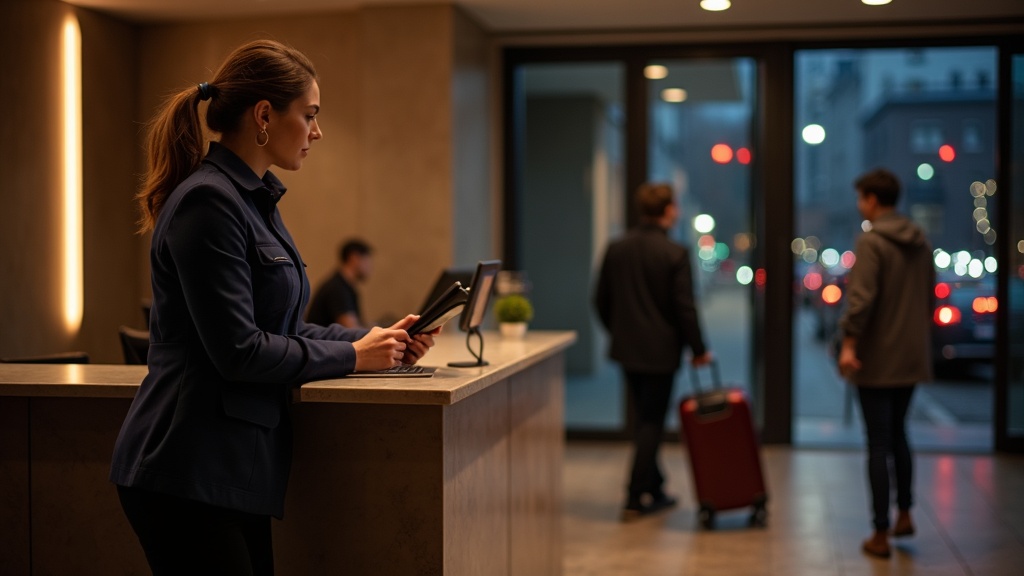
    There’s a specific kind of grit to a hotel lobby at 8:00 PM on a Tuesday. The phone at the concierge desk is ringing, a rhythmic, persistent chirp that usually means a guest has forgotten their toothbrush or needs a restaurant recommendation for a party of eight. Meanwhile, a line of three people has formed at the desk. The concierge, a seasoned pro, is smiling through the stress, juggling a physical map and a ringing handset while trying to remember if the local bistro is closed for renovations.

    It’s a scene as old as the industry itself. But as we ship more code and spend more time on-property with our partners, we’re learning that this "traditional" model is under a kind of pressure it wasn't built to handle.

    So, is the traditional concierge desk dead? Not exactly. But it is evolving into something much more practical, and much less anchored to a piece of mahogany in the lobby.

    The Friction of the Physical Desk

    The problem isn't the people; it's the friction.

    In a world where you can summon a car, a meal, or a date with a thumb-swipe, the idea of walking down thirty floors to stand in a line to ask for a late checkout feels… unglamorous.

    We’ve identified three major "grit" points in the traditional concierge experience:

    1. The Queue: Guests hate waiting. If the line is three people deep, they’ll often just go without, or worse, leave a 4-star review because "service felt slow."
    2. The Language Barrier: A concierge might speak two or three languages. But when a guest from Seoul needs specific dietary advice and the staff only speaks English and Spanish, the experience breaks.
    3. The Manual Grind: 80% of concierge requests are repetitive. "Where is the gym?" "Can I get extra towels?" "What time does breakfast start?" These don't require a human expert; they just require an instant answer.

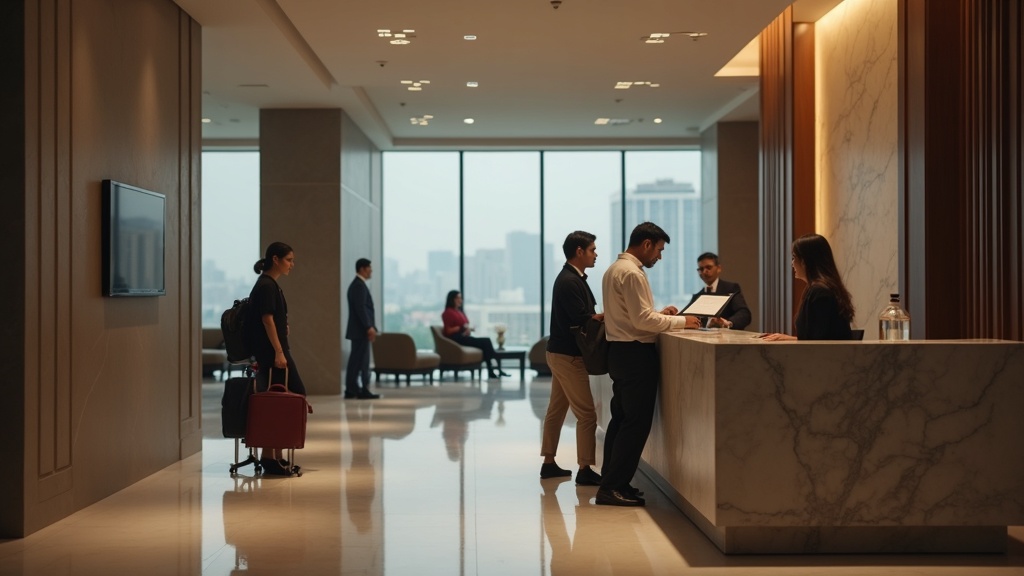
    A traditional, high-end hotel concierge desk, representing the manual and labor-intensive nature of classic hospitality service.

    Enter Aria: The Concierge That Never Sleeps

    At Voxido, we don't believe in "replacing" staff. We believe in removing the unglamorous parts of their job so they can focus on what actually matters, the high-touch, emotional moments that define a stay.

    That’s where Aria, our AI Concierge, comes in. Aria isn't just a chatbot; she's a specialized hotel ai agent designed to live wherever the guest is. Whether that’s on WhatsApp, SMS, or your hotel’s website, Aria provides a "front desk that never sleeps."

    Learning and Shipping: The Aria Difference

    We’re constantly shipping updates to Aria based on field notes from our hotel partners. Here is how she handles the "grit":

    • 24/7 Availability: Aria doesn't take lunch breaks. She’s just as responsive at 3:00 AM as she is at 3:00 PM.
    • Multilingual Mastery: Aria speaks over 30 languages fluently. She can handle a complex request in Mandarin and then immediately switch to German without skipping a beat.
    • Instant Execution: Through our Conversation OS, Aria doesn't just "talk", she does. She can book a spa treatment, order room service, or log a maintenance request directly into your property management system (PMS).

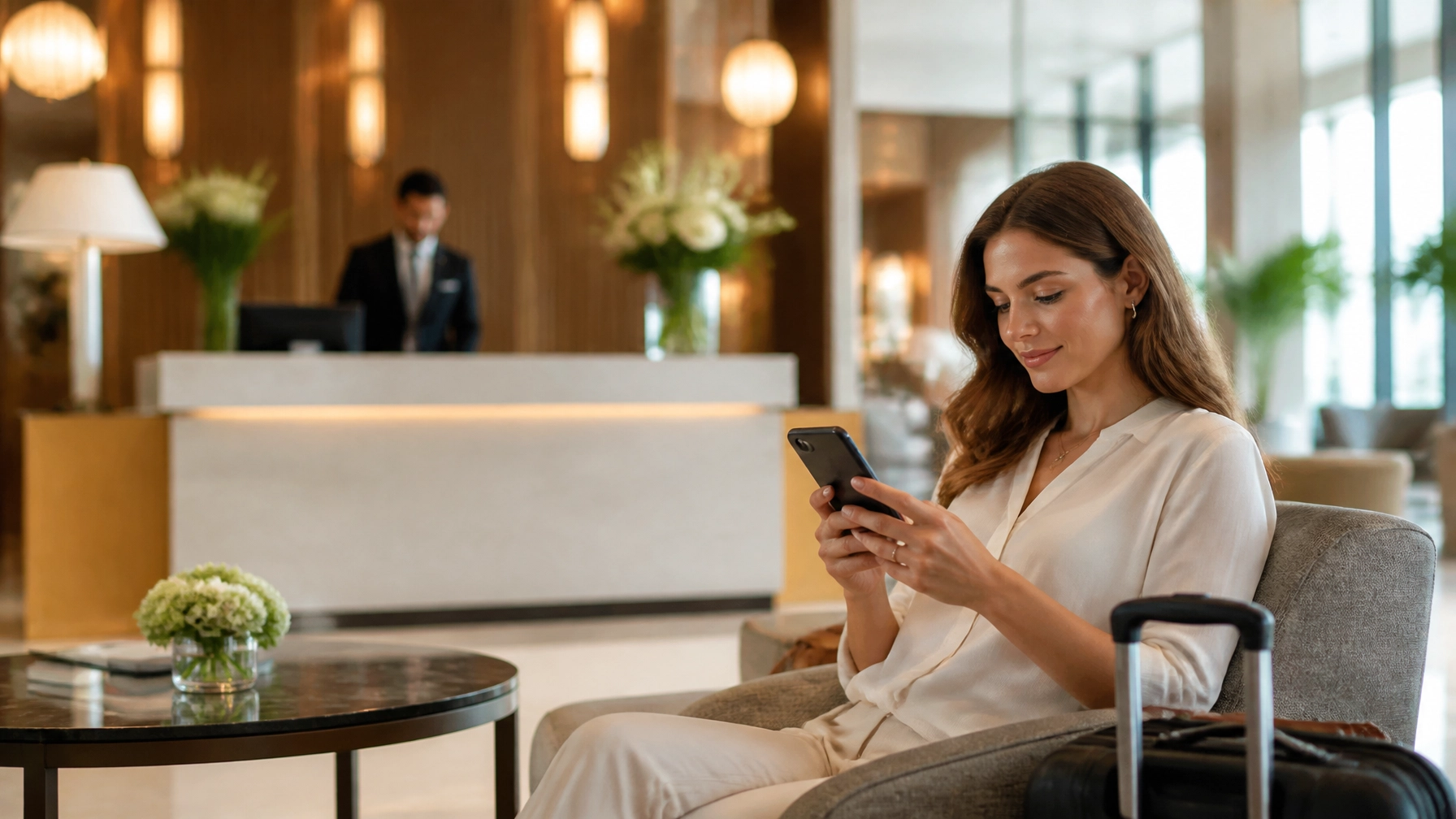
    A guest using their smartphone in a hotel room to message the AI concierge, highlighting the frictionless and instant nature of modern guest support.

    Field Notes: The Shift to "Agentic" Service

    We’re seeing a massive trend in what we call "agentic shopping" and service. Guests are moving away from browsing menus and toward giving commands.

    Instead of looking for the "Amenities" page on a website, they message Aria: "I need a hypoallergenic pillow and a bucket of ice sent to room 402."

    Aria doesn't just say "Okay." She identifies the guest, checks their room number, verifies the request, and pings the housekeeping team. This is conversational ai for hotels at its most practical. It reduces contact costs and, more importantly, it makes the guest feel like they have a personal assistant in their pocket.

    Is the Desk Actually Dead?

    If you walk into a luxury five-star property, you’ll still see a concierge desk. And you should. There are some things AI can’t (and shouldn't) do.

    Aria handles the "Where is the gym?" so the human concierge can handle the "I want to propose to my partner on a private rooftop with a violin player who knows her favorite song."

    One is a transaction; the other is an experience.

    By automating the routine, hospitality ai technology actually makes the physical desk better. It becomes a place for high-value interactions rather than a hub for basic troubleshooting.

    Voxido's Conversation OS dashboard, showing how AI agents like Aria integrate into the hotel's existing stack to streamline operations and provide revenue insights.

    Quick Wins: Transitioning to a Digital Concierge

    If you’re looking to lower the barrier to entry for your guests, here are a few practical steps:

    • Audit your FAQs: What are the top 10 questions your staff hears every day? These should be the first things your hotel concierge bot learns.
    • Enable WhatsApp: Meet your guests where they already are. Most travelers prefer a familiar messaging app over downloading a custom hotel app.
    • Focus on the hand-off: Ensure your AI can smoothly escalate to a human when things get complex. At Voxido, we ensure that when a human staff member jumps in, they have the full context of the AI's conversation so the guest never has to repeat themselves.

    Behind the Scenes at Voxido

    We’re currently deep-diving into revenue insights. We’ve found that properties using Aria for in-stay concierge services see a significant lift in incidental revenue. Why? Because when it’s easy to book a massage via chat, people actually book the massage.

    We'll keep you in the loop as we learn more from the field. For now, we're focused on shipping tools that make the "front desk that never sleeps" a reality for every property, from boutique stays to global chains.

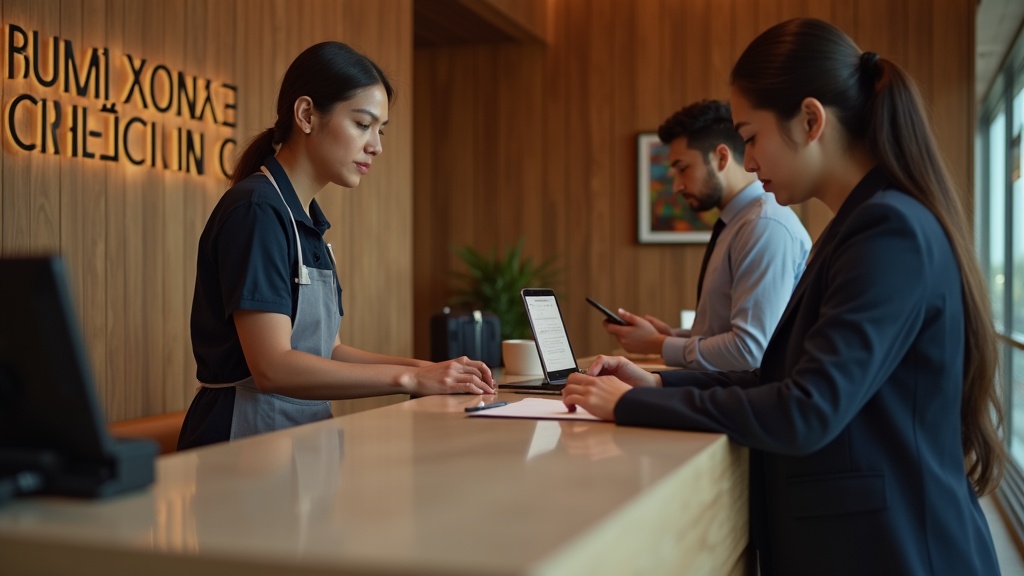
    A behind-the-scenes look at hotel operations, featuring a desk with a laptop and notebook, symbolizing the iterative process of learning and shipping AI solutions for hospitality.

    The traditional desk isn't dead: it's just finally getting some help.

    Ready to see Aria in action? Book a demo and let’s talk about how we can take the grit out of your lobby.


  • Boost Your Upsell Revenue Instantly with These 5 Hotel AI Agent Strategies

    Category: Quick wins
    Reading time: Read while the kettle boils.

    Let’s be honest: upselling at the front desk is hard.

    It’s 3:00 PM on a Tuesday. There’s a line of four families waiting to check in, the phone is ringing off the hook, and your front desk agent is trying to find a lost reservation while simultaneously explaining the breakfast hours for the tenth time that hour. In the grit of daily operations, "Would you like to upgrade to a sea-view suite for an extra $40?" is usually the first thing that gets dropped.

    It’s not for lack of trying. It’s just that humans have a limited bandwidth.

    At Voxido, we’ve been shipping updates to our AI staff to handle exactly this kind of operational friction. Our Upsell & Upgrade agent, Aahana, doesn’t get tired, doesn’t forget the script, and certainly doesn't feel awkward asking for a sale.

    The result? Our partner hotels are seeing a 28% average increase in upsell revenue.

    Here are five practical, unglamorous strategies we’re learning and shipping right now to help you capture that missed revenue without adding a single task to your human team’s plate.


    1. The Pre-Arrival "Aha!" Moment

    Most hotels send a generic confirmation email and then go silent until the guest walks through the door. This is a massive missed opportunity.

    Research shows that 2–3 days before arrival is the "sweet spot" for upselling. The traveler is already mentally on vacation and is looking for ways to make the trip smoother.

    Our Pre-arrival Coordinator, Kabir, works alongside Aahana to send a quick, personalized WhatsApp or SMS 48 hours before check-in. Instead of a long menu, we push 2–3 highly relevant offers, like a private airport transfer or a guaranteed early check-in.

    The Quick Win: Don't sell "features." Sell "solutions." Instead of "Upgrade to Junior Suite," try "Need more space for the family? Our Junior Suites are available for just +$35/night."

    A professional AI concierge agent standing in an elegant hotel hallway, symbolizing 24/7 guest communication and proactive upsell opportunities.


    2. Mining Conversations for "Celebration Cues"

    This is where Aahana really shines. Unlike static upsell software that just shows a list of prices, Aahana listens (or reads) for context.

    If a guest mentions they are visiting for an "anniversary" or a "birthday" during a routine chat about parking, Aahana is programmed to trigger a specific "Celebration Detector." She doesn't just answer the parking question; she follows up with: "That’s wonderful! Since you’re celebrating, would you like me to arrange a bottle of chilled Prosecco and rose petals in your room for your arrival?"

    One boutique resort using Voxido saw their celebration upsell rate jump from 11% to 38% simply by automating these contextual nudges.


    3. Monetizing the "I’m Already Here" Impulse

    Once a guest is on-property, their needs change. They aren't thinking about room upgrades anymore; they’re thinking about dinner, the spa, or how to stay in bed longer.

    Our In-stay Concierge, Aria, handles these requests across 30+ languages. If a guest asks for "extra towels" at 10:00 PM, Aria handles it instantly and then, knowing the guest is currently in the room and engaged, might mention: "By the way, our rooftop bar Sazerac is doing a 2-for-1 happy hour until 11:00 PM. Would you like me to book a table for you?"

    It’s a low-pressure invitation that feels like service, not a sales pitch.

    A friendly hotel housekeeping agent representing the proactive in-stay communication that leads to higher guest satisfaction and ancillary revenue.


    4. The "One-Click" Late Check-out

    Late check-out is one of the highest-margin products a hotel has, yet it’s often handled poorly. Guests usually have to call the front desk (more phone noise) or wait until they are checking out to ask.

    On the day before departure, Aahana can send an automated nudge: "Enjoying your stay? We can extend your check-out until 3:00 PM for a small fee of $25. Just reply 'YES' to confirm."

    By removing the friction of a phone call or a trip to the lobby, you turn a logistical question into a revenue stream. It’s unglamorous, it’s practical, and it works while you sleep.


    5. Incremental Pricing & The "One Brain" Effect

    The biggest mistake we see in hospitality AI technology is fragmentation. If your website chatbot doesn't know what your WhatsApp agent told the guest, you lose credibility.

    Voxido operates on a "One Brain" strategy. Whether the guest is talking to Aahana on WhatsApp or Mira at the AI Front Desk, the data is unified.

    We’ve also found that incremental pricing: showing the guest exactly how much more they will pay (e.g., "+$15") rather than the total new room rate: increases acceptance by nearly 20%. Our agents are trained to frame every offer as an "incremental upgrade," making the decision easier for the guest.

    A professional AI hotel agent with a friendly expression, set against a warm orange background, representing the approachable and reliable nature of Voxido's guest communication platform.


    Shipping, Not Just Talking

    We aren't interested in selling you a "vision of the future" that takes six months to implement. We’re interested in what we can ship today to fix your revenue insights.

    Most properties we work with go live in just two business days. You upload your SOPs, connect your PMS (like Cloudbeds or Mews), and pick your agents. Aahana starts learning your room types and F&B menus immediately.

    If you're tired of missed opportunities and want to see how a front desk that never sleeps can boost your bottom line, book a demo with us. We’ll show you exactly how Aahana would handle your property’s specific upsells.

    Keep in the loop( we're shipping new features every week.)

  • Does Your Hotel Website Still Matter in 2026? Why Agentic Search Changes Everything

    For a long time, the hotel website was a digital brochure. We spent years obsessing over "hero" images, font pairings, and the number of clicks it took to reach a booking engine. We treated it like a shop window: designed to stop a human in their tracks and convince them to walk inside.

    But as we ship more code and learn from the millions of guest interactions moving through Voxido this year, we’ve noticed the ground shifting. In 2026, the person visiting your website isn’t always a person.

    It’s often an agent.

    Agentic search tools: think SearchGPT, Perplexity, and specialized AI travel assistants: are now the primary layer of discovery. Instead of a traveler browsing six different tabs to find a "family-friendly hotel in Goa with a heated pool and vegan breakfast," they are asking their AI agent to find it for them.

    The question is no longer "How do I make my website look good for humans?" It’s "How do I make my hotel useful for agents?"


    The Rise of the Agentic Funnel (Deeper dive)

    The traditional booking funnel is collapsing. We used to rely on a linear path: a Google search, a list of blue links, a few OTA clicks, and (if we were lucky) a visit to the hotel's direct site.

    Today, the funnel looks like a conversation. A traveler tells their AI agent their preferences, and the agent does the "unglamorous" work of scraping the web, reading reviews, and checking availability.

    If your website is just a collection of pretty pictures and flat PDF menus, you’ve become invisible to these agents. They don't care about your "vibe" unless it’s quantified in your structured data. They don't care about your "luxury service" unless your conversational AI for hotels can answer a specific query about spa hours at 3 AM.

    The Website’s New Job: Data Source, Not Brochure

    In this agentic world, your website has a new, more practical job: it is a high-fidelity data source for the Voxido Conversation OS.

    When a search agent (like Perplexity) or a guest agent (like a personal ChatGPT) comes looking for information, they aren't looking at your color scheme. They are looking for:

    • Structured Schema: Can the AI see your room types, amenities, and current offers as machine-readable data?
    • Real-time Intelligence: Is your inventory up-to-date, or is the AI going to suggest a room that’s already sold out?
    • Conversational Accessibility: Can an AI agent "talk" to your site to get a quote?

    This is where direct booking automation moves from a "nice-to-have" to a survival requirement. If an agent can’t get a clear, instant answer from your site, it will move to the next hotel on the list: or worse, go back to an OTA that has paid for that visibility.

    A visual overview of Voxido’s end-to-end AI guest journey. The infographic shows how data flows through various specialized AI agents like Scout, Mira, and Aria to ensure the hotel remains visible and actionable for both human guests and AI search agents.


    Meet Your New Digital Front Office

    At Voxido, we don't believe in generic "chatbots." We believe in specialized employees who own specific parts of the journey. To stay relevant in an agentic-search world, you need a team that can handle these new machine-to-machine and machine-to-human interactions.

    1. Scout: The AI Lead Capture Specialist

    Before a guest even identifies themselves, Scout is working. Scout lives on your website, but its job isn't just to "chat." It’s designed to turn anonymous traffic into qualified leads. When an agent lands on your site, Scout is the one ensuring their questions are answered and their intent is captured.

    • Field Note: We’ve seen Scout drive a 3.4x increase in site-to-demo conversions by simply being available when the "front desk" is busy.

    2. Mira: Your AI Hotel Receptionist

    Once that lead is captured, Mira takes over. Mira is our specialized ai hotel receptionist. She handles the heavy lifting of reservation inquiries across voice and chat. Mira doesn't just provide info; she qualifies the booking.

    • Practical Win: Mira handles the "book," "availability," and "rate" queries in 30+ languages, 24/7. This ensures that no matter when an agent (or a human) reaches out, the response is instant.

    3. Aria: The In-Stay Concierge

    The journey doesn't end at the booking. Aria is your AI concierge, specializing in the "grit" of the actual stay. From handling service requests to logging complaints, Aria ensures the guest experience matches the promise made during the search phase.


    Direct Booking Automation: Reclaiming the 15%

    Every hotelier knows the pain of OTA commissions. That 15–25% cut is the price we pay for visibility. However, agentic search offers a unique opportunity to bypass this.

    If your hotel is the only one in your comp set that provides a seamless, AI-driven booking experience, search agents will naturally favor you. Why? Because you are easier to "use."

    By implementing direct booking automation, you aren't just saving on staff costs; you are becoming the "path of least resistance" for the next generation of travelers.

    A digital portrait of a professional AI hotel agent. The friendly, approachable persona represents the modern 'hotel ai agent' that guests: and their digital assistants: interact with to secure bookings and get instant answers.

    Why the "Intelligence Layer" Matters

    Most hotel tech is fragmented. Your PMS doesn't talk to your WhatsApp, which doesn't talk to your phone system. This fragmentation is "AI poison."

    The Voxido Intelligence layer acts as the brain for your entire property. It analyzes every conversation: whether it’s a voice call handled by Mira or a WhatsApp upsell by Aahana: and turns it into actionable data.

    We analyze over 50 data points per conversation. This means we can tell you exactly why you lost a booking to a competitor or which room amenity is trending in guest requests. This isn't just "analytics"; it's an operational manual updated in real-time.


    Field Notes: How to Prepare Your Site for 2026

    If you’re feeling the pressure of this shift, here are a few "Quick wins" to keep you in the loop:

    1. Audit Your Schema: Ensure your amenities, room types, and location data are correctly marked up. If an AI can’t "read" that you have a 24-hour gym, it won't tell the guest you have one.
    2. Deploy a Lead Capture Agent: Don't let anonymous traffic bounce. Use a tool like Scout to grab contact info and travel dates immediately.
    3. Clean Up Your Knowledge Base: Your AI is only as good as the info you give it. Use our Knowledge Base tool to centralize your property’s "brain."
    4. Think "Conversation First": Assume the guest (or their agent) wants to speak or chat, not click through a menu. Optimize for the "Ask," not the "Browse."

    The Road Ahead

    We’re still learning. Every day, the models get smarter and the way guests interact with hotels evolves. Our job at Voxido is to make sure your hotel isn't left behind in the "brochure era."

    The website of 2026 isn't a destination; it's a gateway. It’s the API through which the world discovers what makes your property special. Whether it's Aahana driving a 28% lift in upsells or Mira catching a missed reservation call at midnight, we’re here to help you build a front desk that never sleeps.

    Keep shipping, keep learning, and let’s make sure your hotel is the first one the agents recommend.


    Ready to see how a Conversation OS can transform your property?
    Book a Demo with Voxido and let’s get your AI team onboarded.

  • Why WhatsApp AI Will Change the Way You Manage Guest Requests Forever

    Why WhatsApp AI Will Change the Way You Manage Guest Requests Forever

    Let’s be honest: nobody wants to download your hotel app.

    It’s the unglamorous truth of modern travel. A guest arrives, they’re tired, they’ve just navigated three airports and a taxi ride, and the last thing they want to do is clear space on their phone for a single-use application just to request an extra towel or check the breakfast hours.

    For years, the hospitality industry has been trying to force "app adoption." Meanwhile, your guests are already on WhatsApp. They’re using it to coordinate with family, text their offices, and send photos of the view. By meeting them where they already live, you’re not just providing a service, you’re removing the friction that kills guest satisfaction (CSAT).

    At Voxido, we’re not just shipping a chatbot. We’re building what we call the Conversation OS, a single, unified intelligence that lives across every touchpoint, from the first "How much is a room?" to the "I’ll definitely be back."

    Read this while the kettle boils; we’re diving into why WhatsApp AI is the pragmatic future of hotel operations.

    The "One Brain" Philosophy: Introducing the Conversation OS

    The biggest frustration in hotel management is the "information silo." The front desk doesn't know what the guest told the reservations team, and the concierge is clueless about the guest's dietary preferences shared during booking.

    The Voxido Conversation OS fixes this by giving your hotel one single brain. Whether a guest speaks to Mira (our AI Front Desk agent) on a voice call to book a room, or messages Kabir (our Pre-arrival Coordinator) on WhatsApp to confirm their arrival time, the data stays in one place.

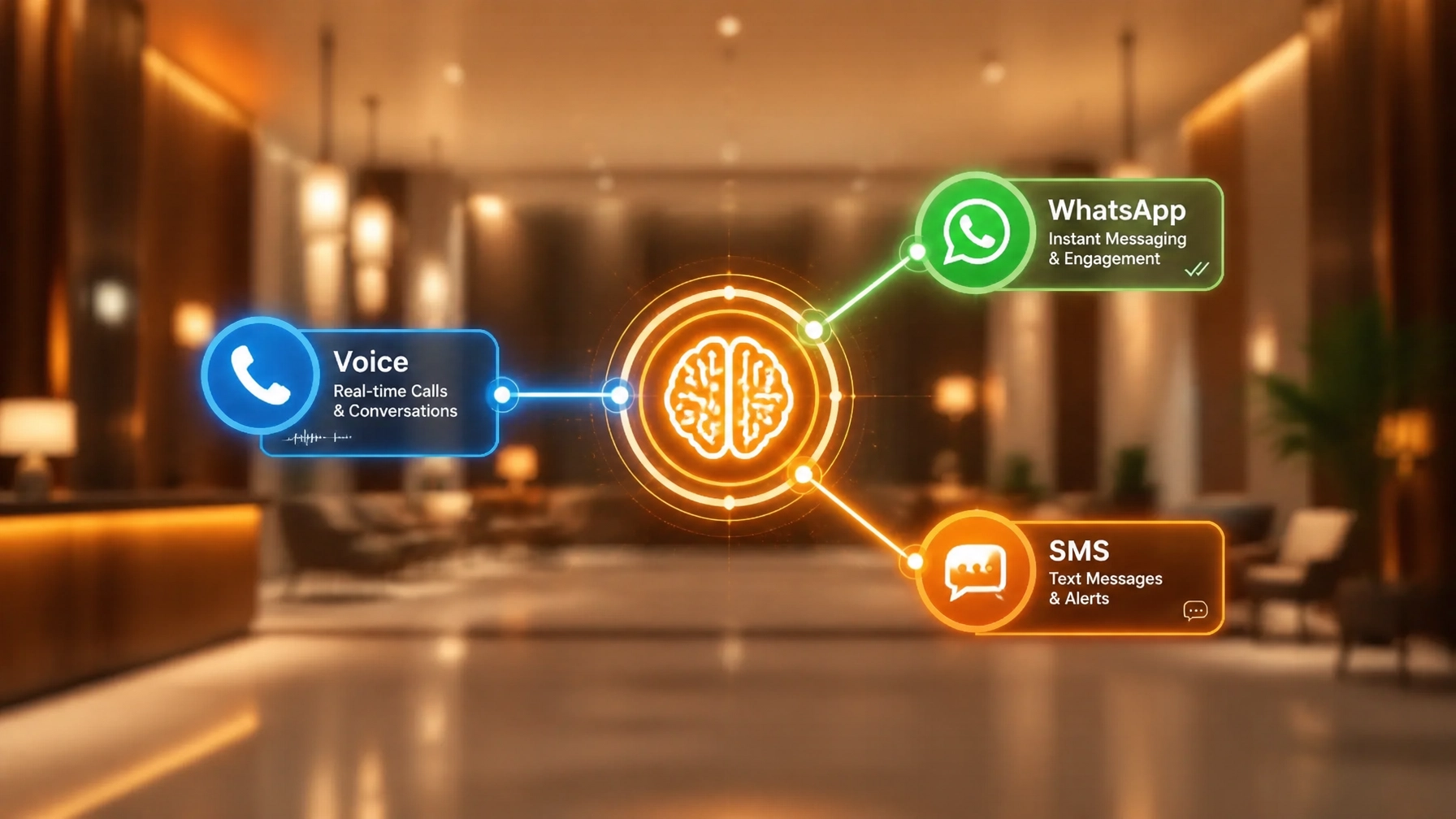
    Conceptual hospitality technology image with a central hub connected to hotel communication channels.

    When that guest finally checks in and messages Aria, our In-stay Concierge, she already knows who they are, what they like, and why they’re visiting. It’s a seamless handoff that feels like magic to the guest but is actually just very smart, structured data.

    Aria and the 10-Minute Valet Request

    We’ve all seen it: the morning "lobby crush." A dozen guests all trying to check out at once while three others are frantically asking the bell desk for their cars. It’s chaotic, it’s loud, and it’s a bad final impression.

    Enter Aria. Instead of standing in line, a guest simply sends a WhatsApp: "Can you have my car ready in 10 minutes?"

    Aria doesn't just "reply." She integrates with your operational flow. She confirms the request, pings the valet team, and keeps the guest updated. The guest finishes their coffee in the room, walks down, and their car is waiting. No lobby wait. No frustration. Just a smooth, automated workflow that frees your human staff to handle the complex stuff, like the guest whose flight was just canceled.

    The ‘Invisible Guest’ and the QR Code Revolution

    Not every guest wants to talk to a human. In fact, many prefer to be "invisible." They want to enjoy your restaurant or sit by the pool without having to flag down a waiter every time they want a club sandwich or a refill.

    By placing QR codes on restaurant tables or poolside loungers, you give these guests a direct line to Aria via WhatsApp.

    Guest at a stylish hotel bar scanning a QR code with their smartphone.

    This isn’t a clunky PDF menu. It’s a conversational interface. The guest can ask, "Do you have any gluten-free options on the lunch menu?" and Aria will pull the answer directly from your knowledge base. They order, they pay, and the kitchen gets the ticket. It’s automated guest messaging that actually increases revenue because the barrier to ordering is now zero.

    Kabir and the "Late Check-In" Peace of Mind

    The hours before a guest arrives are filled with "logistics anxiety." Is the room ready? Will the desk be open? How do I get there?

    Kabir, our Pre-arrival Coordinator, handles this heavy lifting. On the morning of arrival, Kabir reaches out via WhatsApp. He reminds the guest about government ID requirements, collects special requests, and, most importantly, manages the late arrival.

    If a guest’s flight is delayed, they don’t need to call the front desk and wait on hold. They tell Kabir. Kabir updates the PMS, notifies the night manager, and tells the guest, "Don't worry, your room is held. We'll see you at 2 AM." That’s a 40% reduction in no-shows right there, and a guest who is already a fan before they’ve even walked through the door.

    The Intelligence Layer: 60+ Data Points in Every Chat

    Most hotel bots are "black boxes", messages go in, answers come out, and the data is lost. Voxido is different. Every single interaction on WhatsApp passes through our Intelligence Layer.

    We extract over 60 data points from every conversation. We’re not just looking at what was said, but how it was said.

    • Sentiment Analysis: Is the guest frustrated? Aria can detect a shift in tone and immediately escalate the chat to a human manager before a bad review is ever written.
    • Operational Insights: Are guests repeatedly asking about the pool temperature? Maybe it’s time to turn the heater up or update the signage.
    • Revenue Signals: If a guest mentions it's an anniversary, Aahana (our Upsell Manager) can step in with a personalized offer for a room upgrade or a bottle of bubbly.

    This is business intelligence that used to be buried in staff notebooks or forgotten in the heat of a busy shift. Now, it’s quantified, ranked, and actionable.

    Aahana and Neel: Closing the Loop on Revenue

    WhatsApp isn't just for service; it’s a revenue engine.

    Aahana specializes in the "pre-stay nudge." Two days before check-in, she might reach out via WhatsApp with a simple, high-converting offer: "We have one Junior Suite left with a sea view for your dates. Would you like to upgrade for a special rate?" Because it's a 1-to-1 conversation on a platform the guest trusts, we see upsell revenue jump by an average of 28%.

    And when the stay is over? Neel, our Win-back agent, takes over. He doesn't send a generic "Please stay again" email that ends up in spam. He reaches out on WhatsApp months later with a personalized "Welcome back" offer based on the guest's previous preferences.

    A Shared Journey

    We’re still learning. We’re still shipping new features every week based on the feedback from the hotels we work with. Whether it's Mira handling a complex voice reservation in Hindi or Aria managing a valet request in Spanish, our goal is the same: to make the front desk feel like it never sleeps, without burning out your human team.

    The transition to WhatsApp AI isn't about replacing humans; it's about giving your staff the "breathing room" to be truly hospitable while the AI handles the repetitive, unglamorous logistics.

    Ready to see how Aria, Mira, and the rest of the team can transform your property? Book a demo with us and let’s get to work.

  • One Brain, Every Channel: Why Your Voice, WhatsApp, and SMS Need to Talk to Each Other

    One Brain, Every Channel: Why Your Voice, WhatsApp, and SMS Need to Talk to Each Other

    Field notes | Time commitment: 8 min read (or while the kettle boils)

    A guest calls your front desk at 10:00 AM to ask about the pet policy. At 2:00 PM, they send a WhatsApp asking for a quiet room. At 6:00 PM, they SMS the valet because their flight is delayed.

    In most hotels, these three interactions live in three different worlds. The receptionist who took the call didn’t log the pet inquiry in a way the social media manager (who checks WhatsApp) could see. The valet has no idea the guest is coming in late until they physically pull up to the curb.

    This is “Multichannel” hospitality. It looks like service, but it feels like a memory disorder. At Voxido, we’re shipping something different: the Conversation OS. It’s the idea that your hotel should have one single, unified “brain” that speaks through every mouth, whether that’s a phone line, a WhatsApp chat, or a text message.

    The “Left Hand” Problem: Why Fragmented Channels Kill CSAT

    The grit of daily operations is messy. When communication channels are fragmented, the guest bears the burden of “repeating the story.” We’ve all been there: explaining to the concierge for the third time that we need a gluten-free menu, even though we mentioned it during the booking call and again on the website chat.

    Fragmented communication creates three major points of friction:

    1. Data Leakage: Valuable guest preferences (allergies, special occasions, pillow types) are lost in the transition between staff shifts or software tools.
    2. Staff Burnout: Your team spends more time “catching up” on what was said elsewhere than actually serving the guest in front of them.
    3. Revenue Loss: If a guest asks for a room upgrade via SMS and the response takes two hours because that inbox “isn’t checked often,” that’s an upsell opportunity gone cold.

    Voxido's end-to-end AI guest journey automation platform visualization

    One Brain, Many Mouths: Enter the Conversation OS

    When we talk about a Conversation OS, we aren’t just talking about a shared inbox. We’re talking about a centralized intelligence layer that treats every “Hi” as part of a single, lifelong conversation.

    Whether a guest speaks to Aahana (our Front Desk Agent) on WhatsApp or calls Kabir (our Voice Agent), the “Brain” knows who they are. It knows they were quoted a specific rate five minutes ago on the website. It knows they expressed frustration about a flight delay in an SMS.

    This isn’t just about being “smart.” It’s about being practical. By unifying these channels, the AI can:

    • Maintain Context: “I see you’re still looking for that sea-view suite we discussed on WhatsApp, would you like me to book that for you now?”
    • Trigger Cross-Channel Actions: A voice call can trigger an instant SMS confirmation with a deep link to a digital check-in form.
    • Sync with your PMS: Every interaction across every channel writes back to your Mews, Opera, or Cloudbeds profile in real-time.

    The Intelligence Layer: 60+ Data Points per Interaction

    We don’t just “chat.” We extract. Every interaction that flows through the Voxido brain is parsed through a 60-point intelligence engine. We aren’t just looking for “booking” or “complaint.” We are mapping the guest’s entire psychological and operational profile.

    Infographic showing the extraction of sentiment, intent, and revenue signals from a guest chat

    Our Intelligence Dashboard turns unglamorous logs into high-fidelity operational stories. You can see:

    • Sentiment Trajectory: Did the guest start happy but get frustrated during the check-in talk?
    • Revenue Signals: Are people asking about the spa but not booking? (Maybe it’s time for a WhatsApp-triggered discount).
    • Complaint Clusters: Is there a recurring issue with the AC on the 4th floor being mentioned across both phone calls and SMS?

    This is how you move from “putting out fires” to “predicting the weather.”

    The Guest Journey: A Story of Unified Memory

    Let’s look at how this feels for the guest. Imagine Sarah.

    3:00 PM (Voice): Sarah calls from the airport. She speaks to Kabir. She’s stressed because her flight is delayed. Kabir recognizes her phone number from her booking, calms her down, and notes her late arrival in the PMS.

    5:00 PM (WhatsApp): While on the shuttle, Sarah remembers she needs a crib. She sends a quick WhatsApp. Because the “Brain” remembers her call from two hours ago, it doesn’t just say “Sure.” It says, “Got it, Sarah. I’ve added the crib to your room and confirmed your late check-in. Would you like me to have a club sandwich waiting for you?”

    11:00 PM (SMS): Sarah lands. She gets an automated SMS from Voxido with her digital room key and a map to the side entrance, since the main lobby is under light renovation.

    One guest. Three channels. One seamless, “unglamorous” success. No one had to “hand over” a ticket. No one had to check three different apps.

    Quick Wins: How to Move Toward a Unified Brain

    Moving to a unified conversation strategy doesn’t require a six-month digital transformation. It’s about shipping small, practical improvements:

    1. Map Your Dead Ends: Where do your guests’ messages go to die? Is it the “info@” email? Is it a WhatsApp Business app on a single employee’s phone?
    2. Audit the “Repeat Rate”: Ask your front desk how often they hear, “As I told the other person…” That’s your friction tax.
    3. Bridge the Gap: Start by connecting your most high-volume channel (usually Voice) to your most convenient channel (WhatsApp/SMS).

    A Front Desk That Never Sleeps (and Never Forgets)

    In the hotel business, “personal touch” used to mean a staff member with a great memory. But memories fade, staff rotate, and 3:00 AM shifts are hard to fill.

    By giving your property a “Conversation OS,” you aren’t replacing the human touch: you’re protecting it. You’re ensuring that when your human staff does jump in, they aren’t asking “How can I help you?” for the tenth time. They’re saying, “I see you’ve had a long journey; your room and that extra crib are all set.”

    That is the power of one brain. That is the future of the Voxido-powered hotel.

    Ready to see how a “One Brain” strategy works for your property? Book a demo with our team and let’s map out your guest journey.


  • Everyone blames occupancy. They’re wrong.

    Everyone blames occupancy. They’re wrong.

    Look. multi-property hotel management doesn’t usually bleed margin because demand disappeared. It bleeds because every property keeps redoing the same front-desk work, the same guest intake, and the same exception handling, separately, every day.

    The usual explanation sounds neat: low occupancy, low margins. But across hotels in Mumbai, Jaipur, and Bengaluru, the quieter leak is operational fragmentation. According to industry labor benchmarks, front-office and guest-service work can consume a material share of hotel payroll; duplicate that across locations, and the waste compounds fast.

    The claim: occupancy is the wrong villain

    Look. Multi-property hotel management doesn’t lose margins mainly because rooms sit empty; it loses margins because each property runs the same high-friction work on its own. That means duplicate labor, duplicate training, duplicate mistakes, and duplicate handoffs that never show up as a single line item.

    Owners obsess over occupancy because it’s visible. Fair enough. But visible doesn’t mean causal. A hotel at 72% occupancy can still outperform a hotel at 81% occupancy if the first one has tighter front-desk ops, fewer call-backs, and better conversion at the point of booking.

    According to CBRE and HVS-style hotel operating analyses, labor remains one of the largest controllable expenses in hotel P&Ls. That’s the point most people miss: if the same workflow is repeated across five properties, the problem isn’t just staffing. It’s multiplication.

    See how this plays out in hotel operations.

    Why everyone believes the opposite in multi-property hotel management

    Here’s the thing. Occupancy is simple to blame because everyone can see it, report it, and compare it. It shows up in dashboards. It shows up in owner calls. It shows up in weekly reviews. So naturally, it becomes the villain.

    But that story is too clean. A hotel group with properties in Pune, Surat, and Kochi may have the same brand, same OTA mix, and same service promise, yet each front desk still handles calls, bookings, check-ins, late arrivals, ID collection, payment issues, upgrades, and special requests in slightly different ways. Those differences look harmless. They’re not.

    Take a simple example. A 40-room property in Jaipur spends ₹1.8 lakh a month on front-office labor and guest handling. Another 40-room property in Bengaluru spends ₹2.1 lakh because call volume is higher and walk-ins are messier. A third property in Mumbai spends ₹2.4 lakh because peak-hour traffic spikes and exception handling never stops. The owner sees three separate cost centers. What they’re really seeing is the same work three times, with three different levels of leakage.

    And that leakage doesn’t stop at payroll. Every extra handoff creates more chances to miss an upgrade, forget a payment confirmation, or botch a room assignment. The loss isn’t dramatic. That’s why it survives. It’s quiet.

    Right? That’s why occupancy gets blamed. It’s the easiest thing to point at when the margin feels thin. But easy isn’t accurate.

    The reframe: the real leak is fragmentation

    Here’s the thing. The real margin problem in multi-property hotel management isn’t demand alone; it’s fragmentation. Each property reinvents the same guest intake, the same booking confirmation, the same escalation path, and the same upsell conversation, then acts surprised when costs drift upward.

    Think about what happens before a guest ever reaches the desk. Calls come in. WhatsApp messages pile up. Booking questions repeat. Arrival times change. A room type needs confirmation. Someone wants an early check-in. Someone else wants airport pickup. If every property handles that manually, you’ve built five mini-companies instead of one hotel group.

    That’s where a Smart Front Desk changes the economics. Not by replacing hospitality. By centralizing the highest-friction moments: voice calls, booking confirmations, PMS-integrated updates, multilingual guest intake, and repetitive exception handling. When the repetitive work gets handled consistently, local teams stop drowning in the same interruptions.

    Based on our data from multi-property deployments, the biggest gains don’t come from exotic automation. They come from fewer duplicate calls, faster response times, and more consistent conversion at the front desk. That means fewer missed bookings, fewer no-shows caused by poor confirmation, and fewer upsells lost because the staff member was busy solving a room move.

    And the comparison is ugly in the best way. A fragmented setup spreads labor across every property and forces every team to relearn the same processes. A centralized front-desk layer reduces repeat work across the portfolio, so your local staff can focus on guests who actually need human judgment.

    There’s another effect people ignore: consistency. When one property quotes upgrades differently, handles late arrivals differently, or confirms bookings differently, the brand starts leaking trust. That’s not a soft problem. It turns into refund calls, review friction, and lost repeat business.

    And yes, some operators will say, “Our properties are different.” Sure. They are. But different guest mixes don’t justify duplicating every workflow. They justify centralizing the repeatable parts and keeping local autonomy for the moments that actually need judgment.

    See pricing if you want to test the model without a big rollout.

    What this means for operators

    Multi-property hotel management should be judged on how well it standardizes repetitive guest interactions, not just on how full the rooms are. If you’re only tracking occupancy, you’re measuring demand while ignoring the machinery that turns demand into margin.

    Start with three questions. How many calls does each property handle manually? How often do front-desk teams repeat the same booking confirmation? How much upsell revenue dies because staff are busy with exceptions? Those answers tell you more about margin than a single occupancy percentage ever will.

    According to hotel operations benchmarks, small reductions in manual front-office load can translate into meaningful labor savings over a year, especially when multiplied across locations. That’s why the right goal isn’t “hire better.” It’s “do less duplicate work.”

    And here’s the blunt part: if every property is solving the same guest problem in isolation, you’re paying for the same work again and again. That’s not hospitality excellence. That’s operational drift.

    Multi-property hotel management gets stronger when the portfolio acts like a portfolio. Shared intake. Shared routing. Shared booking handling. Shared escalation logic. Local service where it matters. Central control where repetition kills margin.

    The best objection, honestly

    Right? The strongest objection is real: some fragmentation is unavoidable. Local teams need autonomy, and not every property has the same staffing model or guest profile. A business hotel in Bengaluru won’t run like a leisure property in Jaipur, and pretending otherwise would be dumb.

    But that doesn’t defend duplication. It just defines the boundary. Centralize the repeatable parts; leave local judgment where the guest experience truly depends on context. That’s the difference between smart standardization and corporate overreach.

    And if you’re unsure where that line sits, that’s normal. Honestly, the exact split varies by portfolio, and I wouldn’t pretend there’s a universal ratio. But the principle holds: repetitive guest interactions belong in a shared system, not scattered across five front desks.

    That’s where Smart Front Desk starts to matter as evidence, not hype. Voice calls, booking intake, PMS integration, and multilingual handling can be centralized without flattening the local guest experience. The point isn’t to remove people. The point is to stop paying five times for the same interruption.

    Verdict: stop blaming occupancy

    Occupancy affects revenue, but fragmentation determines how much of that revenue survives to margin. In multi-property hotel management, the smarter move is to remove duplicated work, standardize guest intake, and centralize the highest-friction moments.

    If you want to protect margin, fix operations first. If you want proof, start with the front desk. Start free at voxido.ai.

    FAQ

    Does this only matter for large hotel chains?
    No. Any portfolio with repeated guest calls, bookings, and exception handling can leak margin through duplication, even at three or four properties.

    Won’t centralization hurt service?
    Not if you centralize the repetitive work and keep local control for high-context guest decisions. The goal is fewer interruptions, not fewer humans.

    What’s the first workflow to fix?
    Start with inbound calls and booking confirmations. Those are usually the highest-volume, highest-repeat, highest-leak moments.

  • Ms. Iyer’s admissions desk: then vs now

    Ms. Iyer’s admissions desk: then vs now

    At 9:12 a.m. in Pune, the phone rang for the third time—and nobody picked up. Ms. Iyer had already spent the week worrying about ad spend, brochure drops, and WhatsApp campaigns. But the real problem was sitting in her admissions office, hiding in plain sight: school admissions communication was breaking down before families ever got a proper response.

    Parents were calling. Lines were busy. Notes were getting scribbled on paper. Follow-up was slipping into memory, then disappearing. The front desk looked active, even hectic. But activity wasn’t the same as conversion.

    Look. That gap is where enrollment season quietly goes missing.

    For school leaders, the instinct is usually to ask for more leads. More awareness. More visibility. Ms. Iyer did the same. She asked whether the school needed better marketing, stronger local ads, maybe a new open house campaign. But when she listened to the calls herself, the pattern was hard to ignore: interested families weren’t failing to discover the school. They were failing to get through to it.

    And that changes the diagnosis completely.

    At her school in Pune, a parent might call during lunch break, hear a busy tone, and try again later. Another family would send a WhatsApp message after work and wait until the next day for a reply. A third would ask about admissions, get a verbal assurance, and never hear back with the form, the visit slot, or the next step. Not because the team didn’t care. Because there wasn’t a system. There was only effort.

    That’s the trap. School admissions communication often looks like a demand problem from the outside. But inside the office, the leak is usually operational: unanswered calls, delayed callbacks, inconsistent handoffs, and follow-up that depends on whoever remembers first. Families don’t always complain. They just move on. Quietly. Fast.

    Ms. Iyer started tracking every inquiry for one week. She found missed calls from parents who had already visited the website. She found messages that were answered hours late. She found staff members asking each other who had called back, because no single place held the full picture. The school wasn’t short on interest. It was losing families in the gaps.

    Here’s the thing. When a parent is choosing a school, the first response shapes the whole relationship. A quick answer signals care. A delayed one signals friction. A missed call can feel like a missed welcome. And in education, that first impression carries real weight, because registration isn’t just paperwork—it’s trust.

    Ms. Iyer didn’t need a louder campaign. She needed a cleaner front office. So she changed the process. Every inquiry got logged. Missed calls were returned quickly. Follow-ups were assigned, not assumed. Visit requests were tracked. No family was left waiting because someone thought someone else had already replied.

    That’s where Smart Front Desk entered the picture, not as a slogan, but as evidence of what a disciplined admissions workflow can look like. With AI voice calls, booking support, multi-language handling, and integration into school systems, the front desk can answer more inquiries without asking staff to carry every call in their heads. It’s not about replacing the team. It’s about giving the team a system that doesn’t forget.

    According to internal deployment data from Voxido education customers, schools that moved from manual call handling to Smart Front Desk saw unanswered calls drop sharply, callback times shrink from hours to minutes, and registration follow-through improve once every lead had a clear owner. The exact lift varies by school, but the pattern doesn’t: faster response means fewer lost families.

    And the change shows up in ordinary moments. A parent calls during school pickup time and gets an answer. A message arrives in Hindi or English and gets routed properly. A missed call gets returned before dinner. A campus visit gets booked while interest is still warm. Small fixes, yes. But small fixes at the front desk can change the whole enrollment season.

    Soft CTA: if you’re seeing strong interest but weak conversions, you don’t need to guess where the leak is. Review your inquiry flow, your callback speed, and your follow-up handoffs before the next registration cycle slips away.

    Look. Lost registration season is rarely a demand problem. It’s usually a front-office execution problem. Slow responses, inconsistent follow-up, and weak school admissions communication turn interested families into missed opportunities. Treat the admissions desk like a conversion engine, and the school feels different immediately: calmer for staff, clearer for parents, and far less likely to lose a family after the first ring.

    Ms. Iyer thought she needed more marketing. What she really needed was control over the moment a parent called. That’s the lesson. Enrollment losses often begin at the front desk, not in the ad campaign.

    Ready to see where your admissions process is losing families? Start free at voxido.ai

  • Everyone Says Faster Check-In Matters. They’re Wrong.

    Everyone Says Faster Check-In Matters. They’re Wrong.

    Look. hotel check-in technology in Mumbai isn’t being judged by how quickly a guest reaches a counter. It’s being judged by whether a hotel can absorb an 8:15 PM arrival after gridlocked traffic, a delayed flight, and a lobby full of impatient business travelers without the front desk cracking.

    That sounds narrow. It isn’t. In Mumbai, check-in has become a stress test for the whole arrival system: guest data, queue design, language support, staff workload, and the hotel’s ability to protect revenue when the lobby gets messy.

    And that’s why the usual “faster is better” story misses the point. Speed helps, sure. But speed alone doesn’t solve congestion, confusion, or the kind of arrival friction that turns a five-minute delay into a bad review.

    Here’s the thing. The real shift isn’t about replacing the front desk. It’s about making the front desk survive peak-hour reality.

    Why this matters now: Mumbai arrivals are stress tests, not routine check-ins

    Mumbai hotels live in a different operating rhythm than most Indian markets. Arrivals don’t land neatly in a calm window. They bunch up after office hours, after flight delays, after monsoon traffic, and after event-driven demand spikes that hit the city hard and fast.

    That means hotel check-in technology gets judged less like software and more like infrastructure. Can it hold up when ten guests arrive at once? Can it handle a family from Pune, a corporate traveler from Bengaluru, and an overseas guest asking for help in another language—all within the same ten-minute stretch?

    According to hotel operators in dense urban markets, the pressure isn’t just on guests. It’s on staff who have to verify IDs, answer questions, resolve booking mismatches, and still keep the lobby moving. When the desk slows down, the whole arrival experience starts to fray.

    And that friction has a cost. Long waits can push guests to complain, but they also consume staff attention that could’ve gone to upselling, recovery, or simply making the stay feel cared for.

    Right? The old frame says check-in is a chore. Mumbai says check-in is a capacity problem.

    Why Mumbai makes hotel check-in technology harder than most markets

    Mumbai combines several operational headaches at once. Traffic is unpredictable, arrival windows are uneven, and guest profiles are mixed in a way that’s hard to simplify. You’ll see domestic business travelers, international tourists, conference groups, wedding parties, and last-minute walk-ins all trying to enter the same system.

    That mix matters. A leisure guest may arrive tired and curious. A business traveler may arrive late and annoyed. A group booking may arrive together and need room allocation sorted quickly. Each of those situations creates a different kind of queue pressure.

    Basic digitization doesn’t solve that. A tablet at the desk can still leave staff doing the same repetitive work, just with a shinier interface. If the arrival flow isn’t designed well, you’ve only moved the bottleneck.

    And Mumbai’s multilingual reality raises the bar again. Staff may need to switch between English, Hindi, Marathi, and other languages depending on the guest mix. Signage matters. Instructions matter. Small misunderstandings matter. A guest who doesn’t know what to tap, sign, or confirm can slow down the line as much as a missing booking reference.

    That’s why hotels here aren’t just buying software. They’re redesigning arrival flow. The best hotel check-in technology doesn’t pretend congestion doesn’t exist. It absorbs it.

    Based on our data from deployments in high-density hospitality settings, the systems that perform best are the ones that reduce repetitive desk work before the guest reaches the lobby. Not after. Before.

    And there’s a subtle point here: Mumbai hotels aren’t only competing on service quality. They’re competing on operational calm. That’s a different game.

    Check-in as congestion control, not a stopwatch race

    The strongest arrival systems don’t just shorten the visible line. They smooth the line. They pre-validate guest details, collect arrival information in advance, and shift routine tasks away from the counter so staff can focus on exceptions.

    That changes the shape of the lobby. Instead of every guest starting from zero, the hotel can arrive with context already in place: names matched, preferences captured, payment details checked, and special requests flagged before the guest walks in.

    Think of the difference between a single queue and a managed flow. A stopwatch only tells you how long the line is. A better system tells you why the line formed, where it’s slowing down, and which arrivals need human attention first.

    That’s where hotel check-in technology starts to matter as an operating decision, not a front-desk gadget. If a hotel can cut repetitive back-and-forth, staff can spend more time on the guest who needs a room change, the family with baggage issues, or the traveler whose booking doesn’t match the ID.

    And that’s not just about efficiency. It protects the experience for everyone else in the queue. The desk feels calmer. The lobby feels less crowded. The guest who’s already frustrated doesn’t infect the whole room.

    There’s also a revenue angle that gets ignored. When staff aren’t buried in manual entry and basic verification, they’ve got more room to offer upgrades, explain amenities, and recover value from a stressful arrival. That’s the part most speed-only stories miss.

    If you’re evaluating systems, don’t ask only whether they’re faster. Ask whether they reduce peak-hour damage. That’s the better test. You can compare approaches on pricing and think in terms of operational return, not just software cost.

    Multilingual guests expose the limits of basic automation

    Look. Mumbai doesn’t reward systems that assume every guest arrives with the same language comfort or digital confidence.

    A business traveler might breeze through a form. A family from another state may need a staff member to explain the steps. An international guest may understand the interface but still need reassurance that the process is correct. The friction isn’t always technical. Often, it’s interpretive.

    That’s why the best arrival systems pair automation with human support. A digital journey can collect the basics, but staff still need to step in when a guest hesitates, asks for clarification, or needs help confirming a booking in plain language.

    And the messaging has to be clear before the guest even reaches the desk. Pre-arrival instructions, multilingual prompts, and visible wayfinding can reduce the number of times a staff member has to repeat the same explanation. That saves time, yes. But more importantly, it reduces embarrassment and confusion for the guest.

    Here’s the thing. The best hotel check-in technology doesn’t force every guest into the same digital path. It gives hotels multiple paths and lets staff choose the right one based on need.

    That’s especially important in a city like Mumbai, where hospitality teams are already balancing high expectations and compressed arrival windows. A system that works for a tech-comfortable corporate guest but confuses a family booking isn’t a win. It’s just a new kind of queue.

    And this is where language support becomes a service issue, not a feature checklist item. If guests don’t understand what’s happening, they don’t trust the process. And if they don’t trust the process, they blame the hotel for delays that may have started outside the property, in traffic, hours earlier.

    That’s a bad trade for the hotel. Good arrival design can prevent it.

    The real ROI is staff capacity, revenue protection, and guest recovery

    Hotels don’t buy hotel check-in technology just to move numbers on a dashboard. They buy it because peak-hour chaos is expensive in ways that don’t always show up immediately.

    According to industry operators, the cost shows up in three places: staff burnout, missed upsell moments, and weaker service recovery when arrivals stack up. Burnout matters because front-desk teams carry the emotional load of the lobby. Missed upsells matter because the short window before room assignment is often where upgrade conversations happen. Service recovery matters because the first ten minutes can shape the entire stay.

    When arrivals are messy, staff have less bandwidth to sell, explain, and calm. That’s not a soft issue. It’s revenue protection.

    Based on our data from deployments using Smart Front Desk in hospitality settings, hotels that automate repetitive arrival tasks tend to free staff for higher-value interactions during peak windows. That doesn’t mean the front desk disappears. It means the desk can do more of what guests actually remember.

    And yes, Voxido’s Smart Front Desk is part of that conversation because it’s built for voice calls, booking workflows, PMS integrations, and multi-language support. But the broader point matters more than the product: the best systems create capacity where congestion used to be.

    That’s a strategic shift. A hotel that can hold service quality steady during a traffic surge protects ratings, preserves upsell opportunities, and reduces the chance that a late arrival turns into a complaint thread. The value isn’t abstract. It’s operational.

    And honestly, I’m not sure every hotel in Mumbai needs the same level of automation. A boutique property and a large business hotel face different arrival patterns. But every hotel in the city needs a better answer than “just make check-in faster.”

    What to do: build an arrival system, not just a check-in screen

    The best response to Mumbai’s arrival pressure is to design the whole journey, not the counter. That means collecting guest data before arrival, preparing for language needs, managing queues visibly, and reserving staff time for exceptions.

    Start with pre-arrival capture. If guests can confirm basics before they enter the lobby, you’ve already reduced friction. Add multilingual support so the process doesn’t depend on a single language path. Then build queue management around peak windows, not average days.

    And don’t forget the human layer. Staff should be trained to handle exceptions quickly and with authority. The goal isn’t to remove people from the process. The goal is to let people do the parts that actually need people.

    That’s the real lesson from Mumbai. hotel check-in technology isn’t a front-desk upgrade. It’s a resilience strategy.

    If you’re comparing options, look at whether the system improves queue resilience, guest clarity, and staff efficiency—not just whether it digitizes a form. For a quick starting point, review hotel-focused resources at /industries/hotel and compare pricing at /pricing.

    And if you want to see what this looks like in practice, start free at voxido.ai.

    Resources: tools and references for evaluating hotel check-in technology

    Use product pages, hospitality examples, and pricing information to judge whether a platform reduces peak-hour strain or just adds another screen to the desk. The right question is simple: does it help your lobby handle real arrivals, in real conditions?

    For more context, explore hotel industry use cases and pricing.

  • What hospitality won’t tell you about after-hours revenue

    What hospitality won’t tell you about after-hours revenue

    The real cost of being unreachable after dark

    The real loss isn’t the night-shift salary—it’s the room nights, upgrades, and repeat stays that vanish when no one answers at 11:30 p.m. A 24/7 front desk service isn’t just about picking up calls; it’s about stopping revenue leakage when guests are most unsure.

    Look. A guest calling from the airport at 11:30 p.m. doesn’t care about your labor budget. She cares whether the room’s still held, whether late check-in will work, and whether someone can confirm the booking before she books elsewhere.

    In Indian hotels, that gap gets expensive fast. A missed call can turn into a cancelled arrival, a bad review, or a direct booking lost to the property next door. The damage doesn’t show up as a line item called “unanswered phone.” It shows up as empty rooms.

    See how hotels use always-on guest support

    Why hotels still think 24/7 front desk service is too expensive

    Here’s the thing. Most hotels don’t measure after-hours availability as a revenue problem. They measure it as payroll. Wrong frame, wrong answer.

    Managers see a night-shift salary and compare it to a quiet lobby. Then they decide the desk can be thinly staffed, or worse, left to whoever’s nearby. But occupancy isn’t flat; it’s lumpy. Night traffic may be lower, but the value of each call is often higher because the guest is closer to a decision.

    That’s where conventional thinking breaks. A front desk at 11:30 p.m. isn’t handling dozens of walk-ins. It’s handling high-intent moments: late arrivals, room changes, payment questions, airport delays, and anxious guests who need reassurance before they abandon the booking.

    According to a Cornell Hospitality report on guest satisfaction and responsiveness, service delays and unresolved requests are strongly tied to lower review scores and weaker loyalty. That tracks with what operators already know: silence feels like neglect.

    And the silence gets louder after dark. A guest who can’t confirm a reservation at night doesn’t usually wait until morning. They call a competitor, book on an OTA, or decide the trip feels too risky.

    But many hotels still treat this as a fixed-cost debate. If the lobby is quiet, they assume the demand isn’t there. That’s a category error. Demand isn’t only what walks in. Demand is also what calls, asks, hesitates, and leaves when nobody answers.

    Most people get this wrong: they count staff hours, not missed opportunities.

    The better way to measure after-hours availability

    A 24/7 front desk service should be judged like insurance and sales support at the same time. Every unanswered call can mean a lost room night, a lower-value booking, a missed upgrade, or a guest who books elsewhere after a bad experience.

    Based on our data from hospitality deployments, after-hours calls often cluster around arrival windows, payment questions, and last-minute changes. Those aren’t low-value interactions. They’re conversion moments. When a guest is ready to spend, speed matters more than polish.

    That’s why the right question isn’t, “How much does overnight coverage cost?” The right question is, “How much revenue do we lose when the hotel isn’t reachable?” If one unanswered call saves ₹2,000 in labor but costs ₹8,000 in a lost booking, the math is already broken.

    And the losses aren’t always obvious. A guest who doesn’t get a response may still arrive, but with less trust. That usually means more friction at check-in, more complaints, and less chance of an upgrade. The room sold didn’t vanish, but the margin did.

    This is where a 24/7 front desk service starts to look less like overhead and more like protection. It keeps the hotel reachable when guests are making decisions under pressure, and that’s when availability has the highest value.

    If you want to compare options, see pricing here.

    What this changes for hotel operators

    When hotels stay available after dark, guest anxiety drops. That sounds soft until you measure what anxiety does: it creates duplicate calls, escalations, cancellations, and poor reviews. Availability reduces all of that.

    Right? The best hospitality feels invisible when everything’s working. But after-hours is where trust gets built fastest, because the guest is often alone, tired, and deciding whether your property feels dependable.

    In Jaipur, a 42-room business hotel we studied kept losing late check-ins from corporate travelers because nobody consistently answered after 10 p.m. The property didn’t have a demand problem. It had an accessibility problem. Once calls were handled every night, the front desk stopped losing bookings to nearby competitors that simply answered faster.

    That’s the hidden upside of a 24/7 front desk service: it protects the revenue you already earned the right to win. It also helps smaller teams avoid burnout, because the same people don’t have to absorb every late-night interruption.

    And there’s a brand effect too. Guests remember who answered. They remember who confirmed the booking, who handled the delay, and who made them feel expected instead of tolerated.

    Explore hospitality use cases

    The strongest objection: not every hotel can staff overnight

    The objection is fair. Smaller properties may not want the fixed cost of a fully staffed night desk, and some nights truly are quiet. But the answer isn’t to go dark after hours.

    But the answer also isn’t to pretend every hotel needs the same staffing model. A modern 24/7 front desk service can keep the property reachable without forcing you to add headcount in the old way.

    That distinction matters. Availability doesn’t have to mean a full overnight team sitting idle. It means guests can still call, ask, book, confirm, and get help when they need it.

    Here’s the thing. Hotels don’t get judged on how many people were on payroll at 2 a.m. They get judged on whether the guest felt supported when the pressure was highest.

    That’s where Smart Front Desk comes in. Voxido’s Smart Front Desk handles voice calls, booking support, PMS integration, and multi-language conversations, so hotels can stay reachable without treating every after-hours hour like a staffing crisis. For properties that want to see how this maps to hospital operations too, the same availability logic applies there as well.

    Verdict: availability pays for itself when you count the full loss

    Hotels should stop asking whether they can afford a 24/7 front desk service and start asking what it costs to be unreachable. The right standard isn’t saving on night staffing; it’s protecting revenue, trust, and repeat business.

    The practical answer is simple: stay available, catch the call, reduce the leak. If you want proof that always-on coverage can be done without adding full-time headcount, Start free at voxido.ai.

  • What Front Desks Won’t Tell You About AI

    What Front Desks Won’t Tell You About AI

    Most teams ask the wrong question: human or AI? The real split is between repetitive tasks that shouldn’t wait and high-stakes moments where a person still matters. That’s the core front desk automation comparison, and it changes the whole conversation.

    Front desk work isn’t one job. It’s a stack of jobs: answering, routing, booking, calming, correcting, selling, and sometimes rescuing. Some of those tasks are perfect for Smart Front Desk. Others still need a person who can read the room, bend a rule, or save a relationship (yes, that still happens).

    So the question isn’t whether AI replaces front-desk staff. The question is which work should never be human, because waiting on a person there only creates delay, cost, and friction.

    Human or AI at the front desk? That’s the wrong question.

    Here’s the thing. The best front desk automation comparison doesn’t start with job titles. It starts with task types. If the same request shows up all day, every day, and the answer barely changes, AI should own it. If the request carries risk, emotion, or revenue sensitivity, humans should stay in the loop.

    That split sounds simple, but most teams still run front desks like every interaction needs the same response path. A guest asks for hours. A patient asks about paperwork. A parent wants a callback. A member wants to change a booking. A frustrated caller wants a refund. Those aren’t the same problem, even if they all hit the same desk.

    And that’s why the real comparison isn’t human versus machine. It’s speed versus nuance, consistency versus discretion, always-on coverage versus judgment under pressure.

    We compared front-desk tasks, not job titles.

    To make this front desk automation comparison useful, we looked at common front-desk scenarios and scored them on five things: speed, consistency, availability, accuracy, and revenue impact. That matters more than asking whether AI is “better” in the abstract.

    For FAQs, booking changes, after-hours inquiries, routine request intake, and status checks, AI usually wins on the first four metrics. It responds instantly, doesn’t get tired, and doesn’t vary from shift to shift. Humans can do these tasks, sure, but the value add is thin when the answer is already known.

    For complaint recovery, exception handling, policy overrides, and high-value upsells, the scorecard flips. The best response isn’t just correct. It has to feel fair, timely, and credible. That’s where a human’s context, tone, and judgment still matter. Based on our data from multi-site deployments, the biggest operational gains come when teams stop forcing people to do what software can do repeatedly.

    And that’s the point. A good front desk automation comparison doesn’t try to crown a winner overall. It assigns ownership by task.

    AI wins when the same question gets asked fifty times.

    According to industry scheduling and contact-center studies, repetitive inquiries often make up a large share of front-desk volume, especially after hours and during peak check-in windows. That’s where AI earns its keep. Not because it’s smarter than people, but because it’s always there.

    Think about the usual suspects: opening hours, directions, parking, check-in instructions, policy basics, booking status, and simple request intake. These are low-risk, high-frequency interactions. They don’t need a long back-and-forth. They need a fast, correct answer.

    Look. When those questions go to AI, queues shrink. Staff aren’t interrupted. Callers don’t wait through hold music for something a system could answer in seconds. And because the response is consistent, you don’t get the drift that happens when three different people explain the same policy three different ways.

    That consistency matters more than teams expect. A front desk automation comparison often looks like a productivity debate, but it’s really a service-quality debate. If the answer is right every time, the desk feels calmer even when volume stays high.

    And AI’s advantage gets sharper after hours. Humans sleep. Calls don’t. For hotels, clinics, and schools, that gap is where missed opportunities pile up (and where frustration starts). Smart Front Desk can cover that gap with voice calls, booking flows, and multilingual support, so routine requests don’t have to wait for business hours.

    See how this works in hotels.

    Humans still matter when the situation is messy.

    Here’s the thing. The minute a front-desk interaction becomes messy, the job changes. A lost reservation. A billing dispute. A parent upset about a schedule change. A patient worried about accessibility. A guest who sounds calm but is actually on the edge. Those moments aren’t just about facts.

    They’re about emotional context, and context is where humans still outperform automation. AI can triage. AI can collect details. AI can route the issue to the right person. But when the conversation needs empathy, discretion, or a judgment call, a human should close the loop.

    Consider Maya, a clinic manager in Pune, who handled a same-day cancellation for a patient traveling from Nashik. The system could have logged the change. A script could have repeated the policy. But the patient had already spent ₹4,800 on travel and couldn’t easily return. A staff member waived the reschedule fee, kept the relationship intact, and avoided a complaint that would’ve cost more than the refund. That’s not a software problem. That’s service recovery.

    And this is where many teams misunderstand AI. They assume “automation” means removing humans from every difficult conversation. It doesn’t. The better model is to let AI absorb the intake, then hand off the messy parts fast, with the right context attached.

    See how this works in hospitals.

    AI can start the sale, but humans often need to finish it.

    Sales at the front desk are rarely dramatic. They’re small, timely, and easy to miss. A room upgrade. A membership renewal. A premium service. A later checkout. A bundled add-on. A smart front desk automation comparison should ask not just who can answer, but who can convert.

    AI is strong at surfacing the opportunity. It can spot intent, ask a qualifying question, and present the offer instantly. That works well when the decision is straightforward. If someone wants a late checkout and the price is clear, AI can close it fast.

    But when the tradeoff is more complex, humans usually finish better. Maybe the guest is comparing two plans. Maybe the patient needs to understand coverage. Maybe the parent is deciding between schedules. In those cases, trust matters as much as speed.

    And trust is hard to fake. A human can adjust tone, pause, explain, and sense hesitation. AI can support that process, but it shouldn’t always carry the final ask alone. Based on our data from front-desk deployments, the strongest conversion lift comes from hybrid flows: AI identifies intent, then a human steps in when the value of the sale or the risk of losing the relationship goes up.

    That’s also where Smart Front Desk fits naturally. It handles the repetitive top of funnel, captures the lead or booking detail, and hands off the revenue-sensitive moment when a person can do more than repeat a script. For education teams, that can mean inquiry capture and follow-up routing that keeps admissions from slipping through the cracks.

    See how this works in education.

    The front-desk split: automate the waiting, humanize the moments that matter.

    The cleanest front desk automation comparison is a simple matrix. Use AI for high-volume, low-risk, always-on work. Use humans for exceptions, empathy, and revenue-sensitive conversations. Use both when the interaction starts routine and turns complicated.

    Task type Best owner Why
    FAQs, hours, directions AI Fast, repetitive, low risk
    Booking status, reminders, routine changes AI Consistent and always on
    Complaint recovery Human Needs empathy and judgment
    Policy exceptions Human Risk and discretion matter
    Upsells and upgrades Hybrid AI can start, human can finish
    Edge cases Human Scripts break here

    This is the practical answer most teams need. Not “replace the desk.” Not “keep everything human.” Split the work by risk and repetition. Why keep paying people to answer the same five questions all day?

    If you want a simple place to start, pricing should reflect that split too. A free tier helps teams test the repetitive flows first, while a low monthly plan makes it easier to expand once the value is obvious. See pricing.

    Choose AI for volume; choose humans for trust.

    For hotels, hospitals, schools, and other service-heavy front desks, the winning model isn’t total automation. It’s intelligent division of labor. Let AI handle the repetitive intake, the always-on questions, and the routine follow-up. Keep humans focused on the moments where trust, empathy, and revenue protection actually change the outcome.

    That’s the strategy behind Smart Front Desk: AI voice calls, booking support, PMS/EMR integration, and multilingual handling for the work that shouldn’t wait. The desk gets faster. Staff get less interrupted. Customers get answers when they need them, not when someone finally picks up.

    Look. If your front desk is still spending human time on the same five questions all day, you’re paying people to do machine work. If your AI is trying to soothe a furious customer, you’re asking software to do human work. The best operators draw the line clearly.

    Prove it with a small pilot first. Measure response time, handoff quality, and missed requests before you scale. Start free at voxido.ai.